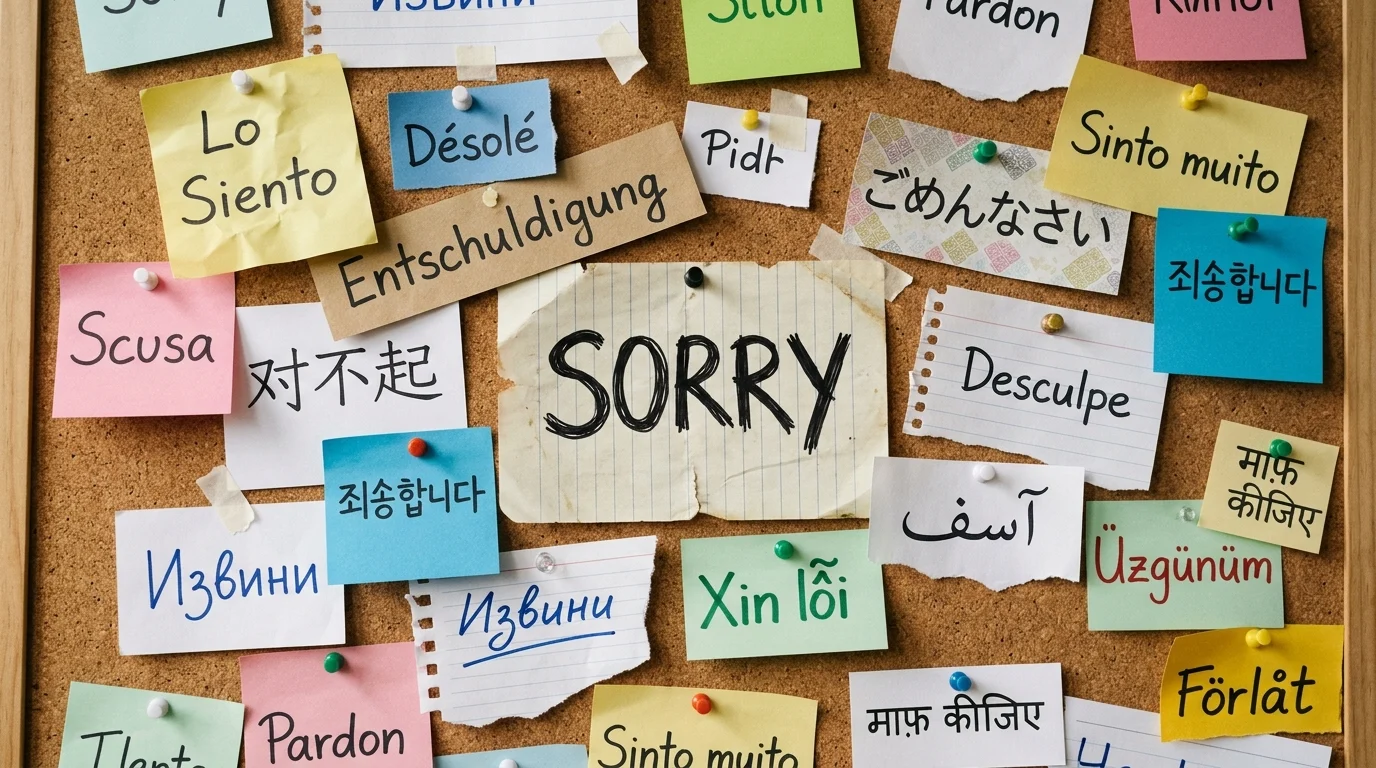
Saying sorry is a simple way to show kindness, accept responsibility, and repair relationships. Around the world, people use different words to apologize, express regret, or ask for forgiveness. If you are searching for sorry in different languages, this guide will help you learn useful apology phrases with native translations, easy pronunciations, example sentences, and English meanings.
Whether you want to apologize to a friend, communicate while traveling, or learn about other cultures, knowing how to say sorry can make conversations easier. Some languages have casual expressions for small mistakes, while others use more formal phrases to show respect.
In this guide, you will discover 70 ways to say sorry around the world, organized by language and region. You will also learn when to use common apology phrases and how to make your apology sound more natural.
How to Say Sorry in Different Languages
The translation of sorry depends on the situation. Some expressions mean “I am sorry,” while others mean “excuse me” or “please forgive me.” Here are some popular translations to start with.
| Language | Native Translation | Easy Pronunciation | Example Sentence | English Meaning |
|---|---|---|---|---|
| Spanish | Lo siento | loh see-EN-toh | Lo siento por mi error. | I am sorry for my mistake. |
| French | Je suis désolé(e) | zhuh swee day-zoh-lay | Je suis désolé pour le retard. | I am sorry for the delay. |
| German | Es tut mir leid | ess toot meer lite | Es tut mir leid. | I am sorry. |
| Italian | Mi dispiace | mee dee-SPYAH-cheh | Mi dispiace per l’errore. | I am sorry for the mistake. |
| Portuguese | Desculpe | desh-KOOL-peh | Desculpe pelo atraso. | Sorry for the delay. |
| Russian | Извините | iz-vee-NEE-tyeh | Извините за опоздание. | Sorry for being late. |
| Indonesian | Maaf | mah-AHF | Maaf, saya terlambat. | Sorry, I am late. |
| Swedish | Förlåt | fur-LOHT | Förlåt att jag är sen. | Sorry that I am late. |
| Mandarin Chinese | 对不起 | dwey-boo-chee | 对不起,我错了。 | Sorry, I was wrong. |
| Arabic | أنا آسف / أنا آسفة | ana aasif / ana aasifa | أنا آسف على الخطأ. | I am sorry for the mistake. |
| Japanese | ごめんなさい | goh-men-nah-sigh | 遅れてごめんなさい。 | Sorry for being late. |
| Korean | 죄송합니다 | joe-song-ham-nee-da | 늦어서 죄송합니다. | I am sorry for being late. |
Sorry in South Asian Languages
South Asian languages include different expressions for apologizing and asking forgiveness. The appropriate phrase can depend on the relationship, the situation, and how formal you want to sound.
| Language | Native Translation | Easy Pronunciation | Example Sentence | English Meaning |
|---|---|---|---|---|
| Hindi | माफ़ कीजिए | maaf kee-jee-ye | मुझे माफ़ कीजिए। | Please forgive me. |
| Urdu | معاف کیجیے | maaf kee-jee-ye | مجھے معاف کیجیے۔ | Please forgive me. |
| Bengali | দুঃখিত | dukh-khi-to | দেরি করার জন্য দুঃখিত। | Sorry for being late. |
| Punjabi | ਮਾਫ਼ ਕਰਨਾ | maaf kar-naa | ਦੇਰ ਲਈ ਮਾਫ਼ ਕਰਨਾ। | Sorry for the delay. |
| Gujarati | માફ કરશો | maaf kar-sho | મોડું થવા બદલ માફ કરશો. | Sorry for being late. |
| Marathi | माफ करा | maaf ka-raa | उशीर झाल्याबद्दल माफ करा. | Sorry for being late. |
| Nepali | माफ गर्नुहोस् | maaf gar-nu-hos | ढिलो भएकोमा माफ गर्नुहोस्। | Sorry for being late. |
| Sinhala | සමාවෙන්න | sa-maa-ven-na | පරක්කු වුණාට සමාවෙන්න. | Sorry for being late. |
Sorry in East Asian Languages
In East Asian cultures, apologies can reflect politeness, respect, and the relationship between speakers. Japanese and Korean, in particular, have different expressions for casual and formal situations.
| Language | Native Translation | Easy Pronunciation | Example Sentence | English Meaning |
|---|---|---|---|---|
| Mandarin Chinese | 对不起 | dwey-boo-chee | 对不起,我错了。 | Sorry, I was wrong. |
| Japanese | ごめんなさい | goh-men-nah-sigh | 遅れてごめんなさい。 | Sorry for being late. |
| Korean | 죄송합니다 | joe-song-ham-nee-da | 늦어서 죄송합니다. | I am sorry for being late. |
| Mongolian | Уучлаарай | oo-chlah-rai | Уучлаарай, би хоцорлоо. | Sorry, I am late. |
| Tibetan | དགོངས་དག | gong-dag | དགོངས་དག། | I am sorry. |
Sorry in Southeast Asian Languages
These phrases can be helpful when traveling, meeting new people, or communicating with speakers of Southeast Asian languages.
| Language | Native Translation | Easy Pronunciation | Example Sentence | English Meaning |
|---|---|---|---|---|
| Indonesian | Maaf | mah-AHF | Maaf, saya terlambat. | Sorry, I am late. |
| Malay | Maaf | mah-AHF | Maaf kerana datang lewat. | Sorry for arriving late. |
| Filipino (Tagalog) | Pasensya na | pah-SEN-shah nah | Pasensya na sa aking pagkakamali. | Sorry for my mistake. |
| Vietnamese | Xin lỗi | sin loy | Xin lỗi vì tôi đến muộn. | Sorry for arriving late. |
| Thai | ขอโทษ | kho-thot | ขอโทษที่มาสาย | Sorry for being late. |
| Burmese | တောင်းပန်ပါတယ် | taung-pan ba-deh | နောက်ကျသွားလို့ တောင်းပန်ပါတယ်။ | I apologize for being late. |
| Khmer | សុំទោស | som-toh | សុំទោសដែលមកយឺត។ | Sorry for arriving late. |
| Lao | ຂໍໂທດ | kho-thot | ຂໍໂທດທີ່ມາຊ້າ. | Sorry for arriving late. |
Sorry in Middle Eastern Languages
In Middle Eastern languages, apology expressions can communicate regret, politeness, or a request for forgiveness. Some languages also change the wording according to the speaker’s gender or level of formality.
| Language | Native Translation | Easy Pronunciation | Example Sentence | English Meaning |
|---|---|---|---|---|
| Arabic | آسف / آسفة | aasif / aasifa | أنا آسف على الخطأ. | I am sorry for the mistake. |
| Persian (Farsi) | متأسفم | mote’assefam | بابت اشتباهم متأسفم. | I am sorry for my mistake. |
| Hebrew | סליחה | s’lee-kha | סליחה על האיחור. | Sorry for being late. |
| Turkish | Özür dilerim | uh-ZOOR dee-leh-reem | Geç kaldığım için özür dilerim. | I apologize for being late. |
| Kurdish (Kurmanji) | Bibore | bee-bo-reh | Ji bo derengmayînê bibore. | Sorry for being late. |
| Pashto | بخښنه غواړم | bakh-sha-na ghwaa-ram | د ناوخته راتلو بخښنه غواړم. | I apologize for arriving late. |
Sorry in Western European Languages
Western European languages have expressions for everyday apologies, formal requests to be excused, and more serious expressions of regret.
| Language | Native Translation | Easy Pronunciation | Example Sentence | English Meaning |
|---|---|---|---|---|
| English | I’m sorry | aim sor-ee | I’m sorry for my mistake. | I am sorry for my mistake. |
| French | Je suis désolé(e) | zhuh swee day-zoh-lay | Je suis désolé pour mon erreur. | I am sorry for my mistake. |
| German | Es tut mir leid | ess toot meer lite | Es tut mir leid. | I am sorry. |
| Dutch | Het spijt me | het spайт muh | Het spijt me voor de fout. | I am sorry for the mistake. |
| Luxembourgish | Et deet mir leed | et date meer layt | Et deet mir leed. | I am sorry. |
| Frisian | It spyt my | it spite may | It spyt my dat ik te let bin. | I am sorry that I am late. |
Sorry in Northern European Languages
Northern European languages use different expressions to apologize for a mistake, inconvenience, or delay. These phrases are useful for everyday conversations.
| Language | Native Translation | Easy Pronunciation | Example Sentence | English Meaning |
|---|---|---|---|---|
| Swedish | Förlåt | fur-LOHT | Förlåt att jag är sen. | Sorry that I am late. |
| Norwegian | Unnskyld | oon-shill | Unnskyld for at jeg er sen. | Sorry that I am late. |
| Danish | Undskyld | oon-skool | Undskyld, jeg kom for sent. | Sorry, I arrived late. |
| Icelandic | Fyrirgefðu | fee-rir-gev-thu | Fyrirgefðu að ég kom of seint. | Sorry that I arrived too late. |
| Faroese | Orsaka | or-sah-ka | Orsaka, eg kom ov seint. | Sorry, I arrived too late. |
| Finnish | Anteeksi | an-teek-see | Anteeksi, että myöhästyin. | Sorry that I was late. |
| Estonian | Vabandust | va-ban-doost | Vabandust, et hilinesin. | Sorry that I was late. |
Sorry in Southern European Languages
These expressions can help you apologize for a mistake or delay while visiting Southern Europe or speaking with someone from the region.
| Language | Native Translation | Easy Pronunciation | Example Sentence | English Meaning |
|---|---|---|---|---|
| Italian | Mi dispiace | mee dee-SPYAH-cheh | Mi dispiace per il ritardo. | I am sorry for the delay. |
| Portuguese | Desculpe | desh-KOOL-peh | Desculpe pelo atraso. | Sorry for the delay. |
| Catalan | Ho sento | oo SEN-too | Ho sento pel retard. | I am sorry for the delay. |
| Galician | Síntoo | SEEN-too | Síntoo polo atraso. | I am sorry for the delay. |
| Romanian | Îmi pare rău | uhm pah-reh row | Îmi pare rău pentru greșeală. | I am sorry for the mistake. |
| Greek | Συγγνώμη | see-GHNO-mee | Συγγνώμη για την καθυστέρηση. | Sorry for the delay. |
| Albanian | Më fal | muh fal | Më fal për vonesën. | Sorry for the delay. |
| Basque | Barkatu | bar-ka-too | Barkatu berandu iristeagatik. | Sorry for arriving late. |
Sorry in Slavic and Eastern European Languages
Many Slavic and Eastern European languages have expressions that can be used to apologize, acknowledge a mistake, or ask someone to excuse you.
| Language | Native Translation | Easy Pronunciation | Example Sentence | English Meaning |
|---|---|---|---|---|
| Russian | Извините | iz-vee-NEE-tye | Извините за опоздание. | Sorry for being late. |
| Ukrainian | Вибачте | vy-bach-te | Вибачте за запізнення. | Sorry for being late. |
| Polish | Przepraszam | psheh-PRAH-sham | Przepraszam za spóźnienie. | Sorry for being late. |
| Czech | Promiňte | pro-MEEN-tyeh | Promiňte za zpoždění. | Sorry for the delay. |
| Slovak | Prepáčte | preh-PAACH-teh | Prepáčte za meškanie. | Sorry for being late. |
| Bulgarian | Съжалявам | suh-zha-LYA-vam | Съжалявам за закъснението. | I am sorry for the delay. |
| Serbian | Извините | iz-vee-NEE-teh | Извините што касним. | Sorry that I am late. |
| Croatian | Oprostite | oh-pros-TEE-teh | Oprostite zbog kašnjenja. | Sorry for the delay. |
Sorry in African Languages
African languages have a rich variety of expressions for apologizing and showing respect. These examples come from several language communities across the continent.
| Language | Native Translation | Easy Pronunciation | Example Sentence | English Meaning |
|---|---|---|---|---|
| Afrikaans | Jammer | YAH-mer | Jammer dat ek laat is. | Sorry that I am late. |
| Amharic | ይቅርታ | yi-kir-ta | ስለ መዘግየቴ ይቅርታ። | Sorry for my delay. |
| Chichewa | Pepani | peh-pah-nee | Pepani chifukwa chochedwa. | Sorry for being late. |
| Hausa | Yi haƙuri | yee ha-koo-ree | Yi haƙuri da na makara. | Sorry that I am late. |
| Igbo | Ndo | n-daw | Ndo maka mmejọ m. | Sorry for my mistake. |
| Kinyarwanda | Mbabarira | m-ba-ba-ree-ra | Mbabarira kuba natinze. | Sorry for being late. |
| Sesotho | Ntšoarele | n-tshwah-reh-leh | Ntšoarele ka ho fihla morao. | Sorry for arriving late. |
| Shona | Ndine urombo | n-dee-neh oo-rom-bo | Ndine urombo nekunonoka. | I am sorry for being late. |
| Somali | Waan ka xumahay | waan ka hoo-ma-hay | Waan ka xumahay inaan soo daahay. | I am sorry that I arrived late. |
| Swahili | Samahani | sa-ma-ha-nee | Samahani kwa kuchelewa. | Sorry for being late. |
| Xhosa | Ndicela uxolo | ndi-che-la oo-xo-lo | Ndicela uxolo ngokufika emva kwexesha. | I apologize for arriving late. |
| Yoruba | Ẹ má bínú | eh mah bee-noo | Ẹ má bínú fún àṣìṣe mi. | Please forgive my mistake. |
| Zulu | Ngiyaxolisa | ngi-ya-xo-lee-sa | Ngiyaxolisa ngokufika sekwephuzile. | I apologize for arriving late. |
Sorry in Austronesian and Other Languages
The following expressions come from languages spoken in the Pacific, Southeast Asia, and other communities around the world.
| Language | Native Translation | Easy Pronunciation | Example Sentence | English Meaning |
|---|---|---|---|---|
| Cebuano | Pasayloa ko | pa-say-lo-a ko | Pasayloa ko sa akong sayop. | Please forgive my mistake. |
| Hawaiian | E kala mai | eh kah-lah my | E kala mai iaʻu. | Please forgive me. |
| Javanese | Nyuwun pangapunten | nyoo-woon pa-nga-poon-ten | Nyuwun pangapunten amarga telat. | I apologize for being late. |
| Malagasy | Miala tsiny | mee-ah-la tseen | Miala tsiny fa tara aho. | Sorry, I am late. |
| Māori | Aroha mai | ah-roh-ha my | Aroha mai mō taku hapa. | Sorry for my mistake. |
| Samoan | Fa’amalie atu | fah-ah-mah-lee-eh ah-too | Fa’amalie atu mo lo’u sese. | I am sorry for my mistake. |
| Sundanese | Hapunten | hah-poon-ten | Hapunten, abdi telat. | Sorry, I am late. |
| Esperanto | Pardonu | par-DOH-noo | Pardonu pro mia eraro. | Sorry for my mistake. |
Different Ways to Apologize in Everyday Conversations
Learning a single word is helpful, but knowing a complete sentence makes it easier to communicate naturally. The wording you choose should match what happened and how serious the situation is.
Here are common situations where an apology may be useful:
- When you make a mistake: I am sorry for my mistake.
- When you arrive late: Sorry for being late.
- When you interrupt someone: Sorry to interrupt.
- When you hurt someone’s feelings: I am sorry I upset you.
- When you need someone to repeat something: Sorry, could you say that again?
- When you want to ask for forgiveness: Please forgive me.
- When you cause an inconvenience: I apologize for the inconvenience.
- When you misunderstand someone: Sorry, I misunderstood you.
Practice translating these sentences into the languages you use most often. Learning phrases in context can help you remember them more easily.
Formal and Informal Ways to Say Sorry
Many languages have casual and formal expressions for apologies. Choosing the right one helps you show respect and avoid sounding too familiar in a professional or unfamiliar setting.
- English: “Sorry” is common in everyday conversation, while “I sincerely apologize” sounds more formal.
- Spanish: “Lo siento” expresses regret, while “Perdón” is often used to apologize or excuse yourself.
- French: “Désolé(e)” expresses regret, while “Je vous prie de m’excuser” is a more formal apology.
- Japanese: “ごめん” is casual, while “申し訳ありません” is a more formal expression.
- Korean: “미안해” is informal, while “죄송합니다” is polite and formal.
- Hindi: “माफ़ कीजिए” is a polite way to ask for forgiveness.
- Urdu: “معاف کیجیے” is a respectful expression used to ask someone to forgive or excuse you.
When you are unsure which expression to use, a polite phrase is usually a good starting point.
Common Mistakes When Translating Sorry
Translating an apology is not always as simple as replacing one word with another. The meaning can change with the situation, tone, and relationship between speakers.
- Using the wrong expression: Some phrases express regret, while others mean “excuse me” or “please forgive me.”
- Ignoring politeness: A casual phrase may not be appropriate when speaking to a teacher, customer, or manager.
- Translating word for word: Natural expressions often differ from the literal English wording.
- Overlooking pronunciation: Incorrect pronunciation can make an apology harder to understand.
- Forgetting context: Apologizing for a small delay is different from accepting responsibility for a serious mistake.
- Assuming one phrase works everywhere: Some languages use different forms depending on gender, formality, or the person being addressed.
A sincere apology should communicate your intention clearly rather than simply copy an English phrase.
Tips to Remember Sorry in Different Languages
Use these practical tips to learn apology phrases and pronounce them more confidently.
- Start with a few languages: Focus on the languages you are most likely to use.
- Say each phrase aloud: Repetition helps you become familiar with unfamiliar sounds.
- Learn complete sentences: Practice phrases for mistakes, delays, and misunderstandings.
- Listen to native speakers: Audio examples can help you understand natural pronunciation.
- Review regularly: Revisit the phrases over several days to strengthen your memory.
- Learn the level of politeness: Notice when a language uses different expressions for friends, strangers, and professional situations.
- Use the phrase in context: Imagine a real conversation and practice responding naturally.
With regular practice, these expressions can become easier to remember and use.
Frequently Asked Questions
How do you say sorry in different languages?
Some common translations include “Lo siento” in Spanish, “Je suis désolé(e)” in French, “Es tut mir leid” in German, “对不起” in Mandarin Chinese, “ごめんなさい” in Japanese, and “معاف کیجیے” in Urdu.
What is the most common way to say sorry in Spanish?
“Lo siento” is a common way to express regret in Spanish. “Perdón” is also widely used when apologizing or asking someone to excuse a minor mistake.
How do you say sorry formally?
Formal expressions depend on the language. In English, you can say “I sincerely apologize.” In French, “Je vous prie de m’excuser” is a polite option. Japanese and Korean also have formal expressions for apologizing.
Is saying sorry the same as asking for forgiveness?
Not always. Saying sorry can express regret or acknowledge a problem, while asking for forgiveness directly requests that someone forgive your action. Some languages use different phrases for these meanings.
How can I learn to pronounce sorry in other languages?
Use a pronunciation guide, listen to native speakers, and repeat each phrase aloud. Practicing the expression in a complete sentence can help you understand both its pronunciation and its appropriate use.
Conclusion
Learning how to say sorry in different languages is a useful way to improve communication and show respect for other cultures. From a casual apology to a formal request for forgiveness, each expression has its own meaning and context.
Practice the translations, pronunciations, and example sentences in this guide. Whether you are traveling, learning a language, or speaking with someone from another culture, a thoughtful apology can help you communicate with greater confidence and kindness.

I am Scarlett Wilson, a passionate language writer who loves exploring different languages, words, meanings, translations, and useful phrases. I enjoy making language learning simple, clear, and interesting for everyone.