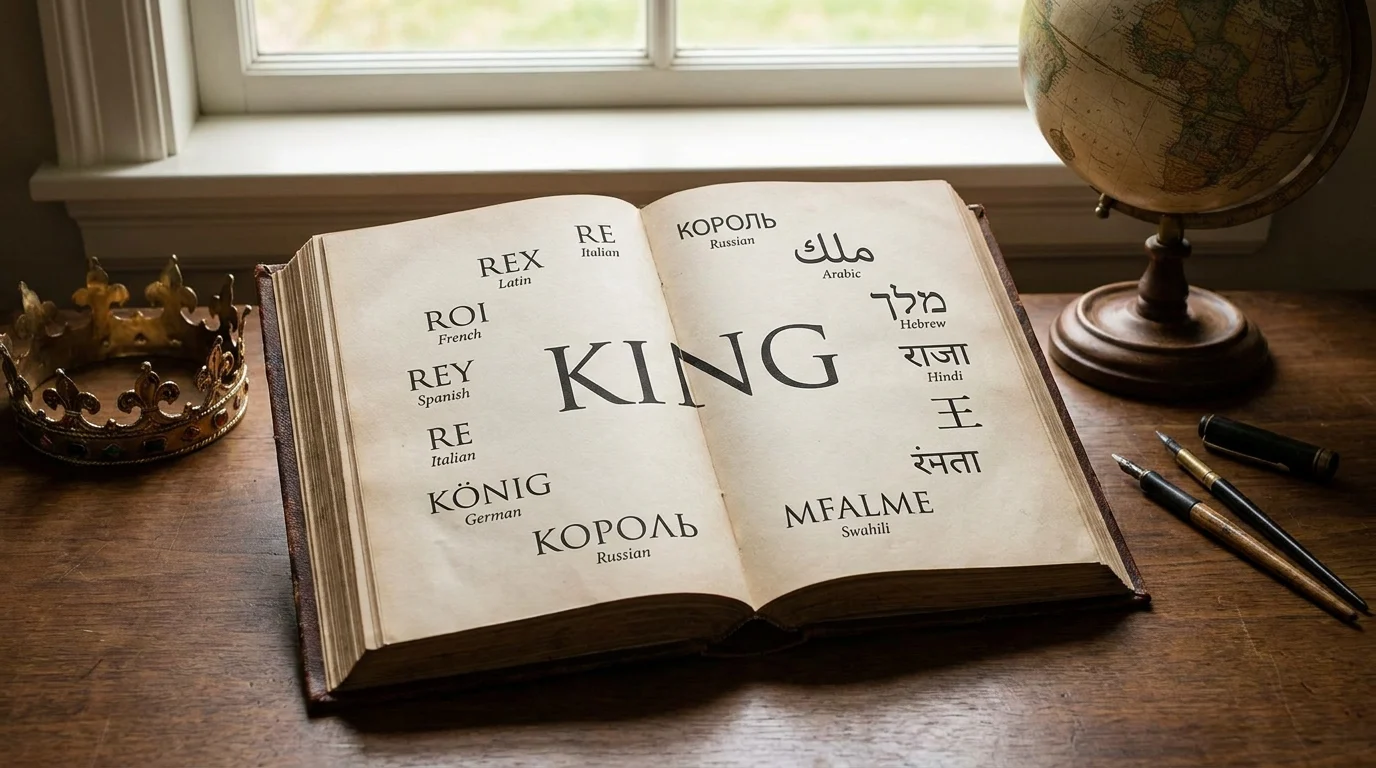
The word king in different languages reveals how people around the world describe a male monarch or ruler. From English and Spanish to Arabic, Hindi, Japanese, and Korean, the word for king changes depending on the language, culture, and writing system.
Whether you are learning a new language, exploring royal vocabulary, writing an article, or looking for a meaningful word for a name or project, this guide provides 70 language translations, easy English pronunciation, and practical example sentences. You will also learn how to use the word naturally and understand the differences between a king, an emperor, and other royal titles.
How Do You Say King in Different Languages?
The word king has different translations around the world. For example, it is rey in Spanish, roi in French, König in German, rājā in Hindi, and ملك (malik) in Arabic.
Here is a quick reference table with eight common translations.
| Language | Word for King | Easy Pronunciation |
|---|---|---|
| Spanish | Rey | Ray |
| French | Roi | Rwah |
| German | König | KUR-nikh |
| Italian | Re | Ray |
| Portuguese | Rei | Ray |
| Arabic | ملك | Ma-lik |
| Hindi | राजा | Raa-jaa |
| Japanese | 王 | Oh |
These translations generally refer to a male monarch. However, the exact word and its usage can vary depending on the language and historical context.
King in European Languages
European languages use words such as rey, roi, König, and król for a king. The following translations include example sentences to show how each word works in everyday language.
Western European Languages
| Language | Native Phrase | Easy Pronunciation | Example Sentence | English Meaning |
|---|---|---|---|---|
| English | King | King | The king lives in the palace. | The king lives in the palace. |
| Spanish | Rey | Ray | El rey vive en el palacio. | The king lives in the palace. |
| French | Roi | Rwah | Le roi vit au château. | The king lives in the castle. |
| German | König | KUR-nikh | Der König wohnt im Schloss. | The king lives in the castle. |
| Italian | Re | Reh | Il re vive nel palazzo. | The king lives in the palace. |
| Portuguese | Rei | Ray | O rei vive no palácio. | The king lives in the palace. |
| Dutch | Koning | KOH-ning | De koning woont in het paleis. | The king lives in the palace. |
Northern European Languages
| Language | Native Phrase | Easy Pronunciation | Example Sentence | English Meaning |
|---|---|---|---|---|
| Swedish | Kung | Koong | Kungen bor i slottet. | The king lives in the castle. |
| Norwegian | Konge | KONG-eh | Kongen bor i slottet. | The king lives in the castle. |
| Danish | Konge | KONG-eh | Kongen bor på slottet. | The king lives in the castle. |
| Finnish | Kuningas | KOO-ning-as | Kuningas asuu linnassa. | The king lives in the castle. |
| Icelandic | Kóngur | KOHNG-ur | Kóngurinn býr í höllinni. | The king lives in the palace. |
| Irish | Rí | Ree | Tá an rí sa chaisleán. | The king is in the castle. |
| Scottish Gaelic | Rìgh | Ree | Tha an rìgh anns a’ chaisteal. | The king is in the castle. |
Southern European Languages
| Language | Native Phrase | Easy Pronunciation | Example Sentence | English Meaning |
|---|---|---|---|---|
| Catalan | Rei | Ray | El rei viu al palau. | The king lives in the palace. |
| Galician | Rei | Ray | O rei vive no pazo. | The king lives in the palace. |
| Romanian | Rege | REH-jeh | Regele locuiește în palat. | The king lives in the palace. |
| Greek | Βασιλιάς | Va-see-LYAS | Ο βασιλιάς μένει στο παλάτι. | The king lives in the palace. |
| Albanian | Mbret | M-bret | Mbreti jeton në pallat. | The king lives in the palace. |
| Maltese | Re | Reh | Ir-re jgħix fil-palazz. | The king lives in the palace. |
| Latin | Rex | Reks | Rex in palatio habitat. | The king lives in the palace. |
Slavic and Eastern European Languages
| Language | Native Phrase | Easy Pronunciation | Example Sentence | English Meaning |
|---|---|---|---|---|
| Russian | Король | Ka-ROL | Король живёт во дворце. | The king lives in the palace. |
| Ukrainian | Король | Ko-ROL | Король живе в палаці. | The king lives in the palace. |
| Polish | Król | Krool | Król mieszka w pałacu. | The king lives in the palace. |
| Czech | Král | Kraal | Král žije v paláci. | The king lives in the palace. |
| Slovak | Kráľ | Kraal | Kráľ býva v paláci. | The king lives in the palace. |
| Croatian | Kralj | Kraly | Kralj živi u palači. | The king lives in the palace. |
| Bulgarian | Крал | Kral | Кралят живее в двореца. | The king lives in the palace. |
King in Asian Languages
Across Asia, translations for king include traditional royal titles that reflect different linguistic histories. Some languages also have separate words for a king, emperor, or ruler of a particular historical kingdom.
South Asian Languages
| Language | Native Phrase | Easy Pronunciation | Example Sentence | English Meaning |
|---|---|---|---|---|
| Hindi | राजा | Raa-jaa | राजा महल में रहता है। | The king lives in the palace. |
| Urdu | بادشاہ | Baad-shaah | بادشاہ محل میں رہتا ہے۔ | The king lives in the palace. |
| Bengali | রাজা | Raa-jaa | রাজা প্রাসাদে থাকেন। | The king lives in the palace. |
| Punjabi | ਰਾਜਾ | Raa-jaa | ਰਾਜਾ ਮਹਿਲ ਵਿੱਚ ਰਹਿੰਦਾ ਹੈ। | The king lives in the palace. |
| Gujarati | રાજા | Raa-jaa | રાજા મહેલમાં રહે છે. | The king lives in the palace. |
| Marathi | राजा | Raa-jaa | राजा राजवाड्यात राहतो. | The king lives in the palace. |
| Nepali | राजा | Raa-jaa | राजा दरबारमा हुनुहुन्छ। | The king is in the royal court. |
Dravidian Languages
| Language | Native Phrase | Easy Pronunciation | Example Sentence | English Meaning |
|---|---|---|---|---|
| Tamil | ராஜா | Raa-jaa | ராஜா அரண்மனையில் இருக்கிறார். | The king is in the palace. |
| Telugu | రాజు | Raa-joo | రాజు రాజభవనంలో ఉన్నాడు. | The king is in the palace. |
| Kannada | ರಾಜ | Raa-ja | ರಾಜನು ಅರಮನೆಯಲ್ಲಿ ಇದ್ದಾನೆ. | The king is in the palace. |
| Malayalam | രാജാവ് | Raa-vaa-vu | രാജാവ് കൊട്ടാരത്തിലാണ്. | The king is in the palace. |
| Sinhala | රජු | Ra-joo | රජු මාලිගාවේ සිටී. | The king is in the palace. |
| Sanskrit | राजा | Raa-jaa | राजा प्रासादे वसति। | The king lives in the palace. |
| Odia | ରାଜା | Raa-jaa | ରାଜା ରାଜପ୍ରାସାଦରେ ରହନ୍ତି। | The king lives in the palace. |
East Asian Languages
| Language | Native Phrase | Easy Pronunciation | Example Sentence | English Meaning |
|---|---|---|---|---|
| Chinese (Mandarin) | 国王 | Gwó-wáng | 国王住在宫殿里。 | The king lives in the palace. |
| Japanese | 王 | Oh | 王は城に住んでいます。 | The king lives in the castle. |
| Korean | 왕 | Wahng | 왕은 궁전에 살아요. | The king lives in the palace. |
| Mongolian | Хаан | Khaan | Хаан ордонд амьдардаг. | The king lives in the palace. |
| Tibetan | རྒྱལ་པོ་ | Gyal-po | རྒྱལ་པོ་ཕོ་བྲང་ནང་བཞུགས། | The king resides in the palace. |
| Cantonese | 國王 | Gwok-wong | 國王住喺宮殿入面。 | The king lives in the palace. |
| Manchu | ᠸᠠᠩ | Wang | ᠸᠠᠩ ᡳ ᠪᠣᠣ ᡳᠴᡝ | The king’s title is expressed using a traditional royal term. |
Southeast Asian Languages
| Language | Native Phrase | Easy Pronunciation | Example Sentence | English Meaning |
|---|---|---|---|---|
| Indonesian | Raja | Raa-jah | Raja tinggal di istana. | The king lives in the palace. |
| Malay | Raja | Raa-jah | Raja tinggal di istana. | The king lives in the palace. |
| Filipino | Hari | Haa-ree | Ang hari ay nasa palasyo. | The king is in the palace. |
| Vietnamese | Vua | Voo-ah | Nhà vua sống trong cung điện. | The king lives in the palace. |
| Thai | พระราชา | Phra raa-chaa | พระราชาประทับอยู่ในพระราชวัง | The king resides in the royal palace. |
| Khmer | ព្រះមហាក្សត្រ | Preah ma-ha-kset | ព្រះមហាក្សត្រគង់នៅក្នុងព្រះราชវាំង។ | The king resides in the royal palace. |
| Burmese | ဘုရင် | Ba-yin | ဘုရင်သည် နန်းတော်တွင် နေထိုင်သည်။ | The king lives in the palace. |
Central and Western Asian Languages
| Language | Native Phrase | Easy Pronunciation | Example Sentence | English Meaning |
|---|---|---|---|---|
| Persian | شاه | Shaah | شاه در قصر زندگی میکند. | The king lives in the palace. |
| Turkish | Kral | Kral | Kral sarayda yaşıyor. | The king lives in the palace. |
| Hebrew | מֶלֶךְ | Meh-lekh | המלך גר בארמון. | The king lives in the palace. |
| Armenian | Թագավոր | Ta-ga-vor | Թագավորը ապրում է պալատում։ | The king lives in the palace. |
| Georgian | მეფე | Meh-peh | მეფე სასახლეში ცხოვრობს. | The king lives in the palace. |
| Azerbaijani | Kral | Kral | Kral sarayda yaşayır. | The king lives in the palace. |
| Kazakh | Патша | Pat-sha | Патша сарайда тұрады. | The king lives in the palace. |
King in African Languages
Many African languages have their own words for kings and traditional rulers. The appropriate title can depend on the language, the community, and the specific royal institution.
African Languages
| Language | Native Phrase | Easy Pronunciation | Example Sentence | English Meaning |
|---|---|---|---|---|
| Swahili | Mfalme | M-fal-meh | Mfalme anaishi katika jumba la kifalme. | The king lives in the royal palace. |
| Zulu | Inkosi | In-koh-see | Inkosi ihlala esigodlweni. | The king lives in the palace. |
| Xhosa | Ukumkani | Oo-koo-m-kah-nee | Ukumkani uhlala ebhotwe. | The king lives in the palace. |
| Yoruba | Ọba | Oh-bah | Ọba ń gbé nínú ààfin. | The king lives in the palace. |
| Igbo | Eze | Eh-zeh | Eze bi n’obí. | The king lives in the palace. |
| Hausa | Sarki | Sar-kee | Sarki yana zaune a fada. | The king lives in the royal palace. |
| Somali | Boqor | Boh-kor | Boqorku wuxuu ku nool yahay qasriga. | The king lives in the palace. |
Additional African and Austronesian Languages
| Language | Native Phrase | Easy Pronunciation | Example Sentence | English Meaning |
|---|---|---|---|---|
| Amharic | ንጉሥ | Ni-goosh | ንጉሡ በቤተ መንግሥት ይኖራል። | The king lives in the palace. |
| Afrikaans | Koning | Koh-ning | Die koning woon in die paleis. | The king lives in the palace. |
| Malagasy | Mpanjaka | M-pan-ja-ka | Mipetraka ao an-dapa ny mpanjaka. | The king lives in the palace. |
| Māori | Kīngi | Kee-ngi | Kei te whare rangatira te kīngi. | The king is at the royal residence. |
| Javanese | Raja | Raa-jah | Sang raja manggon ing kraton. | The king lives in the royal palace. |
| Luxembourgish | Kinnek | Kin-nek | De Kinnek wunnt am Palais. | The king lives in the palace. |
| Albanian | Mbret | M-bret | Mbreti jeton në pallat. | The king lives in the palace. |
How to Use the Word King in Everyday Conversations
The word king can refer to a royal ruler, a historical monarch, or a person who is admired for a particular skill. Its meaning depends on the sentence.
Here are some common examples:
- Royal title: The king welcomed his guests.
- Historical writing: The king ruled the kingdom for many years.
- Chess: The king is the most important piece to protect.
- Playing cards: She drew the king of hearts.
- Informal expression: He is the king of comedy.
When translating the word into another language, consider which meaning you intend. A translation for a royal monarch may not work for a playing card or a casual expression.
What Is the Difference Between a King and an Emperor?
A king generally rules a kingdom, while an emperor traditionally rules an empire, which may include multiple territories or kingdoms. The distinction depends on the political system and historical period.
| Title | General Meaning | Example |
|---|---|---|
| King | Male monarch of a kingdom | King Charles III |
| Emperor | Monarch holding an imperial title | Emperor Naruhito |
| Sultan | Ruler holding a traditional Islamic royal title | Sultan of Brunei |
| Shah | Traditional royal title used in Persian history | Shah of Iran |
| Raja | Royal title used in South and Southeast Asia | A historical Indian raja |
These titles are not interchangeable in every context. Their meanings and historical significance vary across cultures.
Common Mistakes When Translating King
Avoid these mistakes when learning king translations:
- Confusing a king with an emperor: The titles represent different traditional ranks.
- Ignoring grammatical forms: Some languages change the word depending on whether it appears as a subject, object, or title.
- Using pronunciation as a literal spelling: English pronunciation guides are approximations, not replacements for native spelling.
- Assuming similar words mean exactly the same thing: A royal title may have a different historical or cultural meaning in another language.
- Mixing modern and historical titles: Words such as rex, shah, and raja have different cultural and historical contexts.
How to Pronounce King in Different Languages
The easiest way to learn these translations is to practice the native word alongside a short sentence.
- Spanish: Rey, pronounced approximately ray.
- French: Roi, pronounced approximately rwah.
- German: König, with a final sound similar to the German ich in many standard pronunciations.
- Arabic: ملك, pronounced malik.
- Hindi: राजा, pronounced raa-jaa.
- Japanese: 王, pronounced oh in this reading.
- Russian: Король, pronounced ka-ROL.
- Swahili: Mfalme, pronounced approximately m-fal-meh.
For better pronunciation, listen to native speakers and pay attention to sounds that do not exist in English.
Why Do Different Languages Have Different Words for King?
Languages developed their own words for royalty through centuries of cultural contact, political history, and linguistic change.
For example, Spanish rey and French roi developed from the Latin word rex. German König and English king have different linguistic histories. In South Asia, words such as raja and badshah reflect different historical traditions of kingship.
These differences make royal vocabulary a useful way to explore languages and history. A word may also carry cultural associations beyond its basic dictionary definition.
Frequently Asked Questions
What is the most common translation of king in different languages?
Some widely recognized translations include rey in Spanish, roi in French, König in German, raja in Hindi, and malik in Arabic.
How do you say king in 10 different languages?
Here are 10 examples: English king, Spanish rey, French roi, German König, Italian re, Portuguese rei, Hindi raja, Arabic malik, Japanese ō, and Russian korol.
What is the Arabic word for king?
The Arabic word is ملك, commonly transliterated as malik. It refers to a king or monarch, depending on the context.
What is the difference between king and raja?
King is the English term for a male monarch. Raja is a traditional royal title used in South and Southeast Asian languages and historical contexts. The precise status associated with the title depends on the period and institution.
Is king the same as emperor in every language?
No. A king and an emperor traditionally hold different royal ranks. Some languages have distinct words for each title, and the exact distinction depends on historical and political context.
Conclusion
Learning king in different languages helps you explore royal vocabulary, pronunciation, and cultural history. From rey and roi to raja and malik, each translation offers a different linguistic perspective on the idea of a monarch. For accurate use, learn the native spelling, practice the pronunciation, and consider the context in which the word appears.

I’m Jesse Crawford, a language enthusiast and writer passionate about exploring different languages. I create helpful content that makes words, meanings, translations, and language learning simple, useful, and enjoyable for everyone.