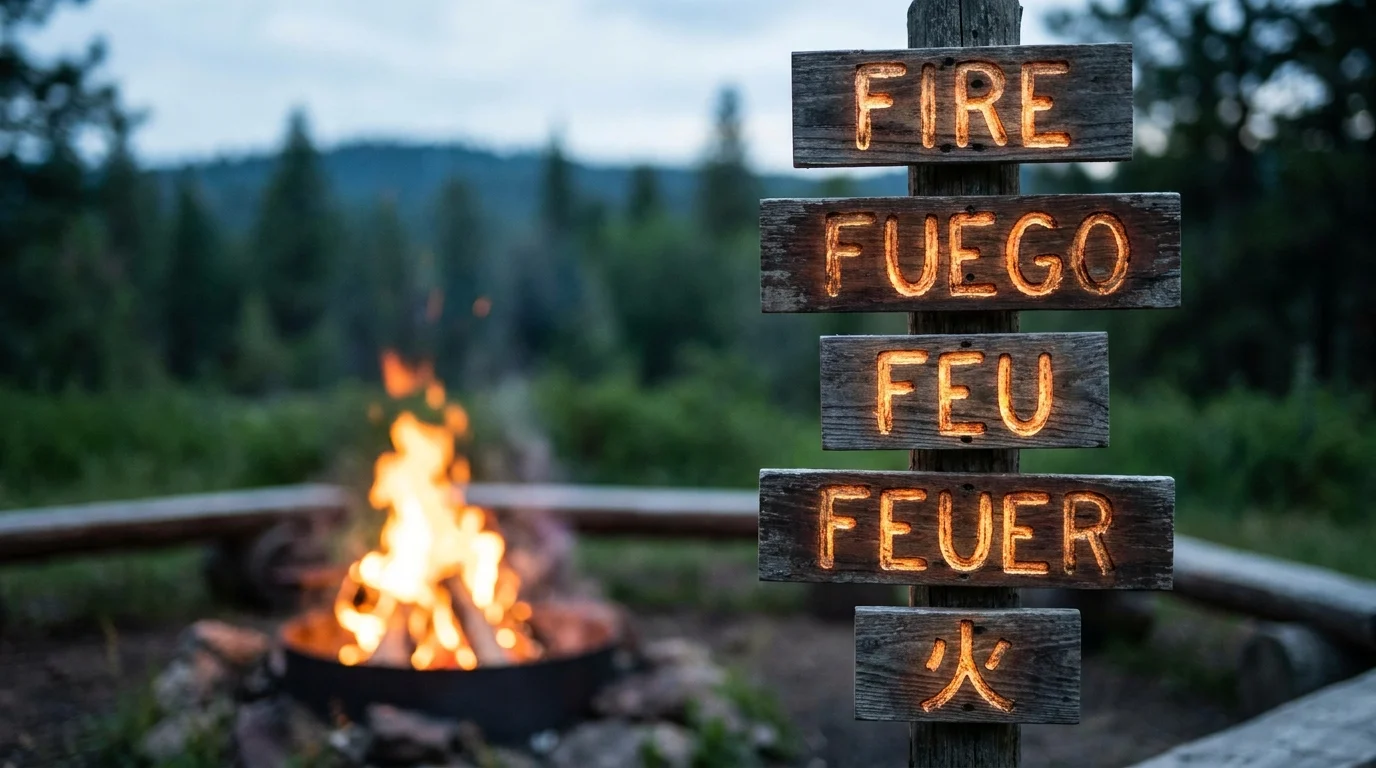
Fire is one of the most recognizable words across the world, representing actual flames, warmth, light, and sometimes passion or energy. Learning how to say fire in different languages is useful for language learners, travelers, writers, students, and anyone curious about how people express everyday words around the world.
The word for fire changes from one language to another, and pronunciation can vary by region. Some languages also use different words for a physical flame, a wildfire, or the act of burning. In this guide, you will find 70 language translations, easy pronunciation guides, and short example sentences with English meanings to help you understand how the word is used in context.
How Do You Say Fire in Different Languages?
The English word fire has different translations around the world. For example, it is आग (aag) in Hindi, آگ (aag) in Urdu, 火 (hi) in Japanese, 불 (bul) in Korean, and feu in French.
Here are eight quick examples to get you started.
| Language | Word for Fire | Easy Pronunciation |
|---|---|---|
| English | Fire | FAI-er |
| Spanish | Fuego | FWEH-goh |
| French | Feu | FUH |
| German | Feuer | FOY-er |
| Hindi | आग | Aag |
| Urdu | آگ | Aag |
| Japanese | 火 | Hi |
| Korean | 불 | Bul |
The translations below focus on the ordinary noun meaning a fire or flame. Pronunciation guides are approximate and are intended to help English speakers get started.
Fire in South Asian Languages
South Asia has many languages with distinct scripts and pronunciation patterns. The word for fire is often used when talking about cooking, warmth, or an emergency.
| Language | Native Phrase | Easy Pronunciation | Example Sentence | English Meaning |
|---|---|---|---|---|
| Hindi | आग | Aag | आग जल रही है। | The fire is burning. |
| Urdu | آگ | Aag | آگ جل رہی ہے۔ | The fire is burning. |
| Bengali | আগুন | Ah-goon | আগুন জ্বলছে। | The fire is burning. |
| Punjabi | ਅੱਗ | Agg | ਅੱਗ ਬਲ ਰਹੀ ਹੈ। | The fire is burning. |
| Gujarati | આગ | Aag | આગ સળગી રહી છે। | The fire is burning. |
| Marathi | आग | Aag | आग जळत आहे। | The fire is burning. |
| Nepali | आगो | Aa-go | आगो बलिरहेको छ। | The fire is burning. |
Fire in East Asian Languages
East Asian languages use different writing systems, including Chinese characters, Japanese kanji, Korean hangul, and traditional scripts.
| Language | Native Phrase | Easy Pronunciation | Example Sentence | English Meaning |
|---|---|---|---|---|
| Chinese (Mandarin) | 火 | Hwaw | 火在燃烧。 | The fire is burning. |
| Japanese | 火 | Hi | 火が燃えています。 | The fire is burning. |
| Korean | 불 | Bul | 불이 타고 있어요. | The fire is burning. |
| Mongolian | Гал | Gal | Гал шатаж байна. | The fire is burning. |
| Tibetan | མེ | Me | མེ་འབར་གྱི་འདུག | The fire is burning. |
Fire in Middle Eastern Languages
Words for fire appear in everyday conversation, traditional literature, and expressions across the Middle East and neighboring regions.
| Language | Native Phrase | Easy Pronunciation | Example Sentence | English Meaning |
|---|---|---|---|---|
| Arabic | نار | Naar | النار مشتعلة. | The fire is burning. |
| Persian | آتش | Aa-tash | آتش روشن است. | The fire is lit. |
| Hebrew | אש | Esh | האש בוערת. | The fire is burning. |
| Turkish | Ateş | Ah-tesh | Ateş yanıyor. | The fire is burning. |
| Kurdish (Kurmanji) | Agir | Ah-gir | Agir dişewite. | The fire is burning. |
| Armenian | Կրակ | Krahk | Կրակը վառվում է։ | The fire is burning. |
| Georgian | ცეცხლი | Tsetskh-lee | ცეცხლი ანთია. | The fire is lit. |
Fire in Western European Languages
Many Western European languages have their own familiar word for fire. These translations are useful for travel, reading, and everyday communication.
| Language | Native Phrase | Easy Pronunciation | Example Sentence | English Meaning |
|---|---|---|---|---|
| French | Feu | Fuh | Le feu brûle. | The fire is burning. |
| Spanish | Fuego | Fweh-go | El fuego está ardiendo. | The fire is burning. |
| Portuguese | Fogo | Fo-goo | O fogo está aceso. | The fire is lit. |
| Italian | Fuoco | Fwoh-ko | Il fuoco sta bruciando. | The fire is burning. |
| German | Feuer | Foy-er | Das Feuer brennt. | The fire is burning. |
| Dutch | Vuur | Vuur | Het vuur brandt. | The fire is burning. |
| Catalan | Foc | Fok | El foc està encès. | The fire is lit. |
Fire in Northern European Languages
Northern European languages include Germanic languages and Finnish, which belongs to a different language family. Notice that the words for fire are not always similar.
| Language | Native Phrase | Easy Pronunciation | Example Sentence | English Meaning |
|---|---|---|---|---|
| Swedish | Eld | Eld | Elden brinner. | The fire is burning. |
| Norwegian | Ild | Ill | Ilden brenner. | The fire is burning. |
| Danish | Ild | Ill | Ilden brænder. | The fire is burning. |
| Icelandic | Eldur | El-dur | Eldurinn brennur. | The fire is burning. |
| Finnish | Tuli | Too-lee | Tuli palaa. | The fire is burning. |
| Estonian | Tuli | Too-lee | Tuli põleb. | The fire is burning. |
Fire in Southern European and Balkan Languages
The Balkan region has several languages with distinct vocabulary and grammatical patterns. Some neighboring languages use similar words for fire.
| Language | Native Phrase | Easy Pronunciation | Example Sentence | English Meaning |
|---|---|---|---|---|
| Greek | Φωτιά | Fo-tyah | Η φωτιά καίει. | The fire is burning. |
| Albanian | Zjarr | Zhar | Zjarri po digjet. | The fire is burning. |
| Romanian | Foc | Fok | Focul arde. | The fire is burning. |
| Serbian | Ватра | Va-tra | Ватра гори. | The fire is burning. |
| Croatian | Vatra | Va-tra | Vatra gori. | The fire is burning. |
| Bulgarian | Огън | Oh-gun | Огънят гори. | The fire is burning. |
| Macedonian | Оган | Oh-gan | Огнот гори. | The fire is burning. |
Fire in Slavic and Eastern European Languages
Slavic languages share historical linguistic roots, but their words for fire differ in spelling, pronunciation, and grammatical form.
| Language | Native Phrase | Easy Pronunciation | Example Sentence | English Meaning |
|---|---|---|---|---|
| Russian | Огонь | Ah-gon | Огонь горит. | The fire is burning. |
| Ukrainian | Вогонь | Vo-hon | Вогонь горить. | The fire is burning. |
| Polish | Ogień | Oh-gyen | Ogień płonie. | The fire is burning. |
| Czech | Oheň | Oh-hen | Oheň hoří. | The fire is burning. |
| Slovak | Oheň | Oh-hen | Oheň horí. | The fire is burning. |
| Slovenian | Ogenj | Oh-geny | Ogenj gori. | The fire is burning. |
| Belarusian | Агонь | Ah-hon | Агонь гарыць. | The fire is burning. |
Fire in Central Asian Languages
Central Asia includes Turkic and Iranian languages. Some of these languages share historical influences, while others have their own distinctive vocabulary.
| Language | Native Phrase | Easy Pronunciation | Example Sentence | English Meaning |
|---|---|---|---|---|
| Kazakh | От | Oht | От жанып тұр. | The fire is burning. |
| Uzbek | Olov | Oh-lov | Olov yonmoqda. | The fire is burning. |
| Kyrgyz | От | Oht | От күйүп жатат. | The fire is burning. |
| Turkmen | Ot | Oht | Ot ýanýar. | The fire is burning. |
| Tajik | Оташ | Oh-tash | Оташ фурӯзон аст. | The fire is lit. |
Fire in African Languages
Africa has thousands of languages, with different writing systems and regional varieties. These seven examples show a small part of that linguistic diversity.
| Language | Native Phrase | Easy Pronunciation | Example Sentence | English Meaning |
|---|---|---|---|---|
| Swahili | Moto | Moh-toh | Moto unawaka. | The fire is burning. |
| Yoruba | Iná | Ee-nah | Iná ń jó. | The fire is burning. |
| Igbo | Ọkụ | Aw-koo | Ọkụ na-ere. | The fire is burning. |
| Zulu | Umlilo | Oom-lee-loh | Umlilo uyavutha. | The fire is burning. |
| Xhosa | Umlilo | Oom-lee-loh | Umlilo uyavutha. | The fire is burning. |
| Afrikaans | Vuur | Fuur | Die vuur brand. | The fire is burning. |
| Amharic | እሳት | Ih-saat | እሳቱ ይነዳል። | The fire is burning. |
Fire in Southeast Asian Languages
In Southeast Asia, the word for fire varies across Austronesian, Tai, Austroasiatic, and Sino-Tibetan languages.
| Language | Native Phrase | Easy Pronunciation | Example Sentence | English Meaning |
|---|---|---|---|---|
| Indonesian | Api | Ah-pee | Api itu menyala. | The fire is burning. |
| Malay | Api | Ah-pee | Api itu sedang menyala. | The fire is burning. |
| Filipino (Tagalog) | Apoy | Ah-poy | Naglalagablab ang apoy. | The fire is blazing. |
| Javanese | Geni | Geh-nee | Geni kuwi murub. | That fire is burning. |
| Burmese | မီး | Mee | မီးလောင်နေတယ်။ | There is a fire burning. |
| Khmer | ភ្លើង | Phlueng | ភ្លើងកំពុងឆេះ។ | The fire is burning. |
| Lao | ໄຟ | Fai | ໄຟກຳລັງໄໝ້. | The fire is burning. |
Fire in Other European Languages
These examples include Celtic languages, Basque, Latin, and Esperanto. They demonstrate how the word for fire can differ even among languages spoken in the same broad region.
| Language | Native Phrase | Easy Pronunciation | Example Sentence | English Meaning |
|---|---|---|---|---|
| Irish | Tine | Tin-eh | Tá an tine ar lasadh. | The fire is burning. |
| Welsh | Tân | Tahn | Mae’r tân yn llosgi. | The fire is burning. |
| Basque | Su | Soo | Sua piztuta dago. | The fire is lit. |
| Latin | Ignis | Ig-nis | Ignis ardet. | The fire is burning. |
| Esperanto | Fajro | Fai-roh | La fajro brulas. | The fire is burning. |
How to Use the Word Fire in Everyday Conversations
The word fire can refer to a flame, a source of heat, or an uncontrolled burning event. Its exact translation depends on the context.
Here are some useful English phrases and their meanings:
- Light a fire: Start a fire intentionally.
- Put out the fire: Stop a fire from burning.
- A fire is burning: Describe a fire that is currently active.
- Fire is spreading: Describe flames moving into another area.
- Fire and smoke: Refer to flames and the smoke they produce.
When translating these phrases, avoid translating each word separately without considering the complete meaning. Natural expressions can differ from literal translations.
Different Meanings of Fire Around the World
Although the basic word refers to flames, fire can carry different meanings depending on how it is used.
- Literal fire: Flames produced by burning wood, paper, or another combustible material.
- Cooking fire: A flame used to prepare food.
- Wildfire: An uncontrolled fire that spreads through vegetation.
- Figurative fire: A word used to describe enthusiasm, determination, or intense emotion.
- Emergency warning: The word fire can indicate a dangerous situation that requires immediate action.
Not every language uses the same word for all these situations. For instance, the word for a flame may differ from the word used in a formal emergency warning.
Common Mistakes When Translating Fire
When learning fire translations, a few simple practices can help you avoid confusion.
- Confusing spelling with pronunciation: Words that look similar may sound different across languages.
- Ignoring accents: Diacritics can change how a word is pronounced or understood.
- Using a noun in the wrong context: A word for fire may not work naturally in an expression about setting something on fire.
- Assuming regional uniformity: Speakers of the same language may use different expressions in different regions.
- Relying entirely on English pronunciation: Approximate pronunciation guides are helpful, but listening to native speakers is better for mastering unfamiliar sounds.
For important situations, particularly emergency instructions, use a trusted translation source or a fluent speaker to confirm the exact wording.
How to Learn Fire in Different Languages
You can remember these translations more easily by learning them in small groups.
- Start with familiar words: Learn aag in Hindi and Urdu, fuego in Spanish, and feu in French.
- Practice native scripts: Read the words aloud while looking at their original spelling.
- Learn short sentences: Remembering a phrase such as Le feu brûle can help you understand how the word works in context.
- Compare related languages: Spanish fuego, Portuguese fogo, and Italian fuoco are useful examples to study together.
- Review regularly: Practice a few words each day rather than trying to memorize all 70 at once.
Frequently Asked Questions
What is the word for fire in 70 languages?
Fire has different translations across the world’s languages. Examples include aag in Hindi and Urdu, fuego in Spanish, feu in French, Feuer in German, hi in Japanese, and moto in Swahili. The regional tables above provide 70 distinct languages with pronunciation and example sentences.
How do you say fire in Japanese?
The Japanese word for fire is 火, pronounced hi. For example, 火が燃えています means “The fire is burning.”
How do you say fire in Arabic?
The Arabic word for fire is نار, pronounced naar. An example is النار مشتعلة, meaning “The fire is burning.”
What is the difference between fire and flame?
Fire is the process of combustion and can also refer to the burning event itself. A flame is the visible, glowing part of a fire. The most appropriate translation depends on whether you mean the overall fire or the visible flame.
Is the word for fire the same in every language?
No. Each language has its own vocabulary, pronunciation, and grammatical rules. Some languages have similar words because of shared linguistic history or borrowing, while others use completely different words.
Conclusion
Learning fire in different languages is a practical way to explore vocabulary, pronunciation, and cultural diversity. From aag in Hindi and Urdu to fuego in Spanish and hi in Japanese, these 70 translations provide a useful starting point for language learning. Practice the words in short sentences to understand how they are naturally used.

I am Scarlett Wilson, a passionate language writer who loves exploring different languages, words, meanings, translations, and useful phrases. I enjoy making language learning simple, clear, and interesting for everyone.