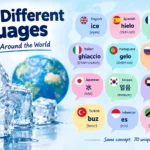
Coffee is one of the world’s most recognizable words and one of the most widely enjoyed drinks. While the pronunciation changes from country to country, many languages use words that are historically connected to the same coffee-trading roots.
If you are learning languages, traveling, communicating with international friends, or simply curious about world languages, knowing how to say coffee in different languages is a useful place to start. Below, you will find 70 coffee translations with simple English pronunciations and practical example sentences.
Coffee in 70 Different Languages
The table below shows coffee in all languages covered in this guide. Pronunciations are simplified for English speakers, so they are intended as practical learning aids rather than exact phonetic transcriptions.
| # | Language | Native phrase | Easy English pronunciation | Example sentence | English meaning |
|---|---|---|---|---|---|
| 1 | English | coffee | KAW-fee | I drink coffee every morning. | I drink coffee every morning. |
| 2 | Spanish | café | kah-FEH | Quiero un café, por favor. | I want a coffee, please. |
| 3 | French | café | kah-FAY | Je prends un café. | I am having a coffee. |
| 4 | German | Kaffee | KAH-fay | Ich trinke Kaffee. | I drink coffee. |
| 5 | Italian | caffè | kahf-FEH | Vorrei un caffè. | I would like a coffee. |
| 6 | Portuguese | café | kah-FEH | Eu quero café. | I want coffee. |
| 7 | Dutch | koffie | KAW-fee | Ik drink koffie. | I drink coffee. |
| 8 | Afrikaans | koffie | KAW-fee | Ek drink koffie. | I drink coffee. |
| 9 | Swedish | kaffe | KAH-feh | Jag dricker kaffe. | I drink coffee. |
| 10 | Norwegian | kaffe | KAH-feh | Jeg drikker kaffe. | I drink coffee. |
| 11 | Danish | kaffe | KAH-feh | Jeg drikker kaffe. | I drink coffee. |
| 12 | Finnish | kahvi | KAH-vee | Juon kahvia. | I drink coffee. |
| 13 | Estonian | kohv | KOHV | Ma joon kohvi. | I drink coffee. |
| 14 | Latvian | kafija | kah-FEE-yah | Es dzeru kafiju. | I drink coffee. |
| 15 | Lithuanian | kava | KAH-vah | Aš geriu kavą. | I drink coffee. |
| 16 | Polish | kawa | KAH-vah | Piję kawę. | I drink coffee. |
| 17 | Czech | káva | KAH-vah | Piju kávu. | I drink coffee. |
| 18 | Slovak | káva | KAH-vah | Pijem kávu. | I drink coffee. |
| 19 | Slovenian | kava | KAH-vah | Pijem kavo. | I drink coffee. |
| 20 | Croatian | kava | KAH-vah | Pijem kavu. | I drink coffee. |
| 21 | Serbian | кафа | KAH-fah | Пијем кафу. | I drink coffee. |
| 22 | Bosnian | kafa | KAH-fah | Pijem kafu. | I drink coffee. |
| 23 | Macedonian | кафе | kah-FEH | Пијам кафе. | I drink coffee. |
| 24 | Bulgarian | кафе | kah-FEH | Пия кафе. | I drink coffee. |
| 25 | Romanian | cafea | kah-FEH-ah | Beau cafea. | I drink coffee. |
| 26 | Hungarian | kávé | KAH-vay | Kávét iszom. | I drink coffee. |
| 27 | Albanian | kafe | kah-FEH | Pi kafe. | I drink coffee. |
| 28 | Greek | καφές | kah-FES | Πίνω καφέ. | I drink coffee. |
| 29 | Turkish | kahve | kah-VEH | Kahve içiyorum. | I am drinking coffee. |
| 30 | Azerbaijani | qəhvə | kuhv-VEH | Mən qəhvə içirəm. | I drink coffee. |
| 31 | Georgian | ყავა | KAH-vah | მე ყავას ვსვამ. | I drink coffee. |
| 32 | Armenian | սուրճ | SOORCH | Ես սուրճ եմ խմում։ | I drink coffee. |
| 33 | Russian | кофе | KOH-feh | Я пью кофе. | I drink coffee. |
| 34 | Ukrainian | кава | KAH-vah | Я п’ю каву. | I drink coffee. |
| 35 | Belarusian | кава | KAH-vah | Я п’ю каву. | I drink coffee. |
| 36 | Kazakh | кофе | KOH-feh | Мен кофе ішемін. | I drink coffee. |
| 37 | Kyrgyz | кофе | KOH-feh | Мен кофе ичем. | I drink coffee. |
| 38 | Uzbek | qahva | kah-VAH | Men qahva ichaman. | I drink coffee. |
| 39 | Tajik | қаҳва | kah-VAH | Ман қаҳва менӯшам. | I drink coffee. |
| 40 | Persian | قهوه | ghah-veh | من قهوه مینوشم. | I drink coffee. |
| 41 | Arabic | قهوة | QAH-wah | أنا أشرب القهوة. | I drink coffee. |
| 42 | Hebrew | קפה | kah-FEH | אני שותה קפה. | I drink coffee. |
| 43 | Hindi | कॉफ़ी | KAW-fee | मैं कॉफ़ी पीता हूँ। | I drink coffee. |
| 44 | Urdu | کافی | KAA-fee | میں کافی پیتا ہوں۔ | I drink coffee. |
| 45 | Bengali | কফি | KAW-fee | আমি কফি খাই। | I drink coffee. |
| 46 | Punjabi | ਕੌਫੀ | KAW-fee | ਮੈਂ ਕੌਫੀ ਪੀਂਦਾ ਹਾਂ। | I drink coffee. |
| 47 | Gujarati | કૉફી | KAW-fee | હું કૉફી પીઉં છું. | I drink coffee. |
| 48 | Marathi | कॉफी | KAW-fee | मी कॉफी पितो. | I drink coffee. |
| 49 | Nepali | कफी | KAW-fee | म कफी पिउँछु। | I drink coffee. |
| 50 | Sinhala | කෝපි | KOH-pee | මම කෝපි බොනවා. | I drink coffee. |
| 51 | Tamil | காபி | KAA-bee | நான் காபி குடிக்கிறேன். | I drink coffee. |
| 52 | Telugu | కాఫీ | KAA-fee | నేను కాఫీ తాగుతాను. | I drink coffee. |
| 53 | Kannada | ಕಾಫಿ | KAA-fee | ನಾನು ಕಾಫಿ ಕುಡಿಯುತ್ತೇನೆ. | I drink coffee. |
| 54 | Malayalam | കാപ്പി | KAA-pee | ഞാൻ കാപ്പി കുടിക്കുന്നു. | I drink coffee. |
| 55 | Thai | กาแฟ | gaa-FEH | ฉันดื่มกาแฟ | I drink coffee. |
| 56 | Vietnamese | cà phê | kah FEH | Tôi uống cà phê. | I drink coffee. |
| 57 | Indonesian | kopi | KOH-pee | Saya minum kopi. | I drink coffee. |
| 58 | Malay | kopi | KOH-pee | Saya minum kopi. | I drink coffee. |
| 59 | Filipino | kape | kah-PEH | Umiinom ako ng kape. | I drink coffee. |
| 60 | Chinese (Mandarin) | 咖啡 | KAH-fay | 我喝咖啡。 | I drink coffee. |
| 61 | Cantonese | 咖啡 | gaa-feh | 我飲咖啡。 | I drink coffee. |
| 62 | Japanese | コーヒー | kōhī | 私はコーヒーを飲みます。 | I drink coffee. |
| 63 | Korean | 커피 | keopi | 저는 커피를 마셔요. | I drink coffee. |
| 64 | Mongolian | кофе | KOH-feh | Би кофе уудаг. | I drink coffee. |
| 65 | Swahili | kahawa | kah-HAH-wah | Ninakunywa kahawa. | I drink coffee. |
| 66 | Amharic | ቡና | BOO-nah | ቡና እጠጣለሁ። | I drink coffee. |
| 67 | Somali | qaxwo | QAH-hwoh | Waxaan cabaa qaxwo. | I drink coffee. |
| 68 | Malagasy | kafe | kah-FEH | Misotro kafe aho. | I drink coffee. |
| 69 | Haitian Creole | kafe | kah-FEH | Mwen bwè kafe. | I drink coffee. |
| 70 | Esperanto | kafo | KAH-foh | Mi trinkas kafon. | I drink coffee. |
How to Say Coffee in Different Languages
If you are searching for how to say coffee in different languages, you will notice a fascinating pattern: many of the words look or sound similar.
Words such as café, caffè, kaffe, koffie, kawa, kava, kahve, kopi, kape, and coffee are historically related through the international spread of coffee and its name.
However, not every language follows exactly the same pattern. For example, Arabic uses قهوة, while Amharic uses ቡና, reflecting a different linguistic tradition for the word.
Coffee Translations Around the World
The word for coffee has traveled across continents along with the drink itself. European languages often have forms related to café, caffè, or kaffe, while languages in other regions have developed their own pronunciations and forms.
In East and Southeast Asia, familiar international forms are also common. Japanese uses コーヒー, Korean uses 커피, Mandarin uses 咖啡, and Indonesian and Malay use kopi.
These similarities make coffee translations especially interesting for language learners. Once you recognize a few patterns, you may be able to guess or remember the word for coffee in another language more easily.
Coffee in All Languages: Useful Patterns to Notice
One of the easiest ways to remember vocabulary is to group similar words together.
Café and Caffè Family
Spanish, French, Portuguese, and Italian use forms that are closely recognizable:
- Spanish: café
- French: café
- Portuguese: café
- Italian: caffè
- Greek: καφές
- Romanian: cafea
Kaffe and Kava Family
Several Northern and Central European languages use forms resembling kaffe or kava:
- Swedish: kaffe
- Norwegian: kaffe
- Danish: kaffe
- Polish: kawa
- Czech: káva
- Slovak: káva
- Croatian: kava
- Slovenian: kava
- Ukrainian: кава
Coffee, Kopi, and Kape
Other widely recognizable forms include:
- English: coffee
- Dutch: koffie
- Indonesian: kopi
- Malay: kopi
- Filipino: kape
- Malagasy: kafe
- Haitian Creole: kafe
- Esperanto: kafo
These patterns are helpful when learning vocabulary across related languages.
Why Does “Coffee” Sound Similar in So Many Languages?
The international history of coffee helps explain many of these similarities. The name traveled through languages and trade networks as coffee became a globally traded product.
The exact history of the word is complex, and different languages adapted it according to their own sounds and writing systems. That is why some words remain strongly recognizable while others look quite different.
Learning these connections can make vocabulary study more memorable. Instead of memorizing 70 completely unrelated words, you can identify groups with similar spelling, pronunciation, or historical roots.
Common Coffee Phrases for Travelers
Knowing the word coffee is useful, but travelers may also want a few practical expressions. Depending on the country, ordering customs and levels of formality vary.
Useful English phrases to learn alongside the local word include:
- “I would like a coffee.”
- “One coffee, please.”
- “Can I have a coffee?”
- “Do you have coffee?”
- “Coffee with milk, please.”
- “Black coffee, please.”
Learning the local word first gives you a simple way to begin an order politely.
Tips for Learning Coffee in Different Languages
If you want to remember these translations, avoid trying to memorize all 70 at once.
Start with five or ten languages you are most likely to use. Read the native spelling aloud, then connect it with the example sentence. After that, group similar words together.
For languages using non-Latin scripts, such as Arabic, Hindi, Japanese, Korean, Greek, and Chinese, learn the written form alongside the pronunciation. This helps you recognize the word on menus, signs, packaging, and restaurant boards.
Most importantly, remember that the pronunciation guides in this table are simplified English-friendly approximations. Native pronunciation can vary by region and accent.
Frequently Asked Questions
1. What is coffee in different languages?
Coffee has many similar forms around the world, including coffee in English, café in Spanish and French, caffè in Italian, Kaffee in German, kahve in Turkish, kopi in Indonesian and Malay, and コーヒー in Japanese.
2. How do you say coffee in Spanish?
In Spanish, coffee is café, pronounced approximately “kah-FEH.” For example, Quiero un café, por favor means “I want a coffee, please.”
3. What is coffee called in French and Italian?
French uses café, while Italian uses caffè. Both words are closely recognizable to English speakers, although their pronunciation differs.
4. What is coffee in Japanese and Chinese?
Japanese uses コーヒー (kōhī), while Mandarin Chinese uses 咖啡. Both are commonly used words for coffee in their respective languages.
5. Why is the word for coffee similar in so many languages?
Many coffee-related words share historical connections because the name traveled between languages as coffee spread through trade and international commerce. Individual languages then adapted the word to their own spelling and sound systems.
Conclusion
Learning how to say coffee in different languages is a simple and enjoyable way to explore global vocabulary. From café and caffè to kaffe, kawa, kopi, kape, and コーヒー, many languages reveal fascinating connections through this everyday word.
Whether you are preparing for international travel, studying languages, or simply exploring coffee around the world, these 70 translations provide a practical starting point for discovering how people refer to one of the world’s most familiar drinks.

I am Ricardo Hunter, Administrator at LingoBuz, passionate about languages, translations, and global communication. I help create useful, clear content that makes exploring different languages simple, enjoyable, and accessible.