Food is one of the easiest ways to connect with people, and the word “appetizer” is useful when talking about menus, restaurants, meals, and food traditions around the world. If you are learning languages, traveling, creating international food content, or simply curious about culinary vocabulary, knowing how to say appetizer in different languages can be surprisingly useful.
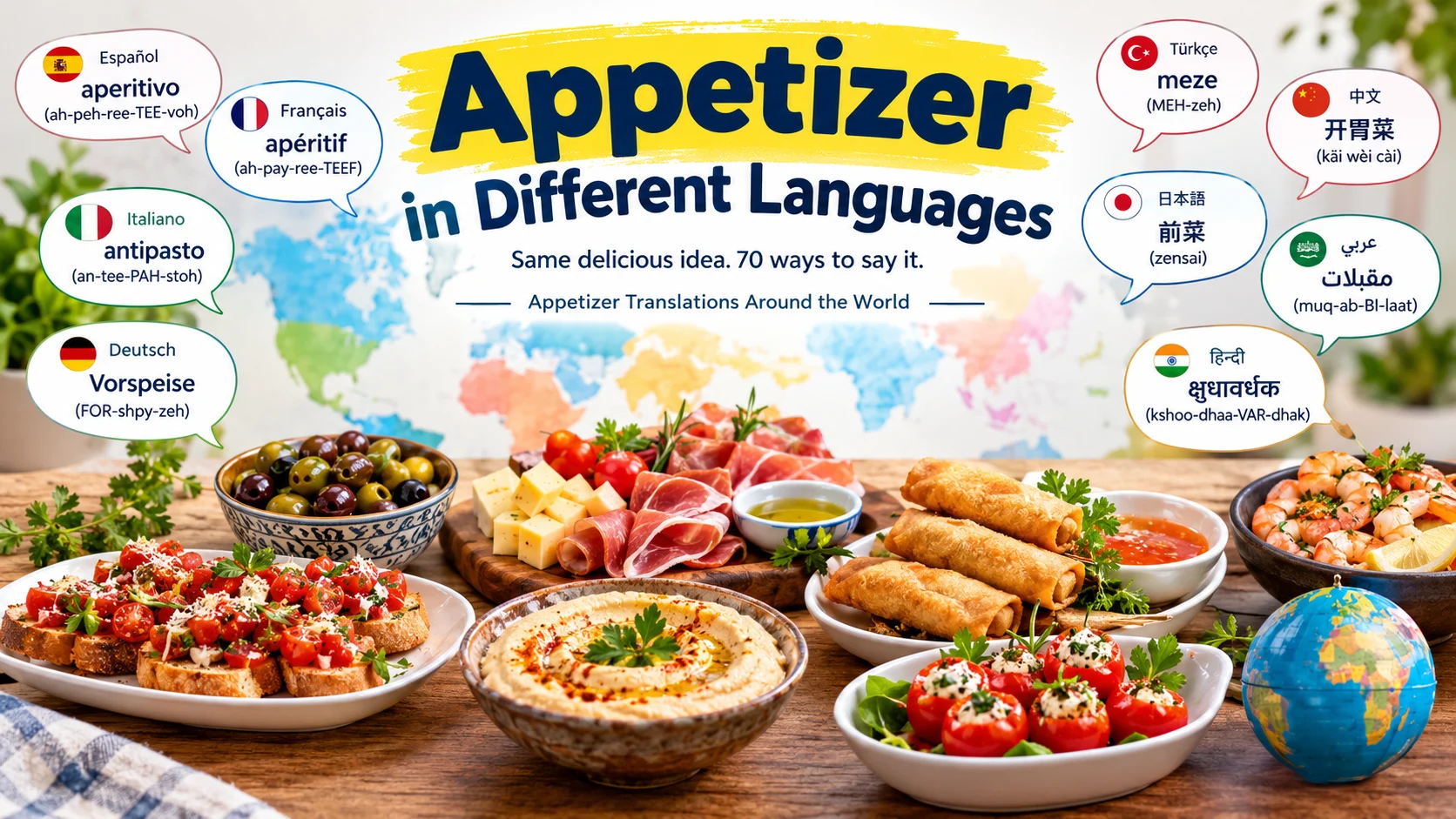
In this guide, you will discover appetizer in different languages across 70 languages. Each entry includes the native translation, an easy English pronunciation, and a short example sentence with its English meaning.
Appetizer in Different Languages
The exact word for appetizer can vary depending on the language and food culture. Some languages use a direct equivalent of “appetizer,” while others use a word closer to starter, hors d’oeuvre, or small dish served before the main course.
| # | Language | Native phrase | Easy English pronunciation | Example sentence | English meaning |
|---|---|---|---|---|---|
| 1 | Spanish | aperitivo | ah-peh-ree-TEE-voh | Pedimos un aperitivo antes de la cena. | We ordered an appetizer before dinner. |
| 2 | French | apéritif | ah-pay-ree-TEEF | Nous avons pris un apéritif avant le dîner. | We had an appetizer before dinner. |
| 3 | German | Vorspeise | FOR-shpy-zeh | Die Vorspeise war sehr lecker. | The appetizer was very delicious. |
| 4 | Italian | antipasto | an-tee-PAH-stoh | Abbiamo ordinato un antipasto. | We ordered an appetizer. |
| 5 | Portuguese | aperitivo | ah-peh-ree-TEE-voh | O aperitivo estava delicioso. | The appetizer was delicious. |
| 6 | Dutch | voorgerecht | VOHR-kheh-rekht | Het voorgerecht was heerlijk. | The appetizer was delicious. |
| 7 | Swedish | förrätt | FUR-ret | Vi beställde en förrätt. | We ordered an appetizer. |
| 8 | Norwegian | forrett | FOHR-ret | Vi bestilte en forrett. | We ordered an appetizer. |
| 9 | Danish | forret | FOHR-et | Vi bestilte en forret. | We ordered an appetizer. |
| 10 | Finnish | alkuruoka | AL-koo-roo-oh-kah | Tilasimme alkuruoan. | We ordered an appetizer. |
| 11 | Icelandic | forréttur | FOR-ret-tur | Við pöntuðum forrétt. | We ordered an appetizer. |
| 12 | Irish | réamhbhia | RAYV-vee-ah | D’ordaíomar réamhbhia. | We ordered an appetizer. |
| 13 | Welsh | blasyn | BLAH-sin | Fe wnaethon ni archebu blasyn. | We ordered an appetizer. |
| 14 | Polish | przystawka | pshih-STAV-kah | Zamówiliśmy przystawkę. | We ordered an appetizer. |
| 15 | Czech | předkrm | PREHT-krm | Objednali jsme předkrm. | We ordered an appetizer. |
| 16 | Slovak | predjedlo | PREHD-yehd-loh | Objednali sme predjedlo. | We ordered an appetizer. |
| 17 | Slovenian | predjed | PREHD-yed | Naročili smo predjed. | We ordered an appetizer. |
| 18 | Croatian | predjelo | PREHD-yeh-loh | Naručili smo predjelo. | We ordered an appetizer. |
| 19 | Serbian | предјело | PREHD-yeh-loh | Наручили смо предјело. | We ordered an appetizer. |
| 20 | Bulgarian | предястие | preh-DYAS-tee-eh | Поръчахме предястие. | We ordered an appetizer. |
| 21 | Macedonian | предјадење | prehd-YAH-deh-nyeh | Нарачавме предјадење. | We ordered an appetizer. |
| 22 | Russian | закуска | zah-KOOS-kah | Мы заказали закуску. | We ordered an appetizer. |
| 23 | Ukrainian | закуска | zah-KOOS-kah | Ми замовили закуску. | We ordered an appetizer. |
| 24 | Belarusian | закуска | zah-KOOS-kah | Мы замовілі закуску. | We ordered an appetizer. |
| 25 | Lithuanian | užkandis | oozh-KAHN-dis | Užsisakėme užkandį. | We ordered a snack/appetizer. |
| 26 | Latvian | uzkoda | ooz-KOH-dah | Mēs pasūtījām uzkodu. | We ordered an appetizer. |
| 27 | Estonian | eelroog | AY-lohrog | Tellisime eelroa. | We ordered an appetizer. |
| 28 | Hungarian | előétel | EH-loh-ay-tel | Rendeltünk egy előételt. | We ordered an appetizer. |
| 29 | Romanian | aperitiv | ah-peh-ree-TEEV | Am comandat un aperitiv. | We ordered an appetizer. |
| 30 | Albanian | meze | MEH-zeh | Porositëm një meze. | We ordered an appetizer. |
| 31 | Greek | ορεκτικό | oh-rek-tee-KOH | Παραγγείλαμε ένα ορεκτικό. | We ordered an appetizer. |
| 32 | Turkish | meze | MEH-zeh | Bir meze sipariş ettik. | We ordered an appetizer. |
| 33 | Arabic | مقبلات | muq-ab-BI-laat | طلبنا مقبلات قبل العشاء. | We ordered appetizers before dinner. |
| 34 | Hebrew | מתאבן | meh-tah-AH-ven | הזמנו מתאבן לפני הארוחה. | We ordered an appetizer before the meal. |
| 35 | Persian | پیشغذا | pish-GHAH | پیشغذا سفارش دادیم. | We ordered an appetizer. |
| 36 | Hindi | क्षुधावर्धक | kshoo-dhaa-VAR-dhak | हमने क्षुधावर्धक मंगवाया। | We ordered an appetizer. |
| 37 | Urdu | اشتہا انگیز غذا | ishtih-AH angez ghiza | ہم نے اشتہا انگیز غذا منگوائی۔ | We ordered an appetizer. |
| 38 | Bengali | ক্ষুধাবর্ধক | khoo-dha-bor-DHOK | আমরা ক্ষুধাবর্ধক অর্ডার করেছি। | We ordered an appetizer. |
| 39 | Punjabi | ਭੁੱਖ ਵਧਾਉਣ ਵਾਲਾ ਭੋਜਨ | bhukk vadhaa-un vaalaa bho-jan | ਅਸੀਂ ਭੁੱਖ ਵਧਾਉਣ ਵਾਲਾ ਭੋਜਨ ਮੰਗਵਾਇਆ। | We ordered an appetizer. |
| 40 | Gujarati | ભૂખ વધારનાર વાનગી | bhookh vadhaar-naar vaan-gee | અમે ભૂખ વધારનાર વાનગી મંગાવી. | We ordered an appetizer. |
| 41 | Marathi | भूक वाढवणारा पदार्थ | bhook vaadh-vuh-naa-raa pad-aarth | आम्ही भूक वाढवणारा पदार्थ मागवला. | We ordered an appetizer. |
| 42 | Tamil | பசியூட்டும் உணவு | pa-si-YOOT-tum oo-na-voo | நாங்கள் பசியூட்டும் உணவை ஆர்டர் செய்தோம். | We ordered an appetizer. |
| 43 | Telugu | ఆకలి పుట్టించే వంటకం | AA-ka-li put-tin-cheh van-ta-kam | మేము ఆకలి పుట్టించే వంటకం ఆర్డర్ చేశాము. | We ordered an appetizer. |
| 44 | Kannada | ಹಸಿವನ್ನು ಹೆಚ್ಚಿಸುವ ತಿಂಡಿ | ha-si-van-nu hech-chi-su-va tin-di | ನಾವು ಹಸಿವನ್ನು ಹೆಚ್ಚಿಸುವ ತಿಂಡಿ ಆರ್ಡರ್ ಮಾಡಿದೆವು. | We ordered an appetizer. |
| 45 | Malayalam | വിശപ്പുണ്ടാക്കുന്ന വിഭവം | vi-shap-pun-DAA-kku-nna vi-bha-vam | ഞങ്ങൾ ഒരു വിശപ്പുണ്ടാക്കുന്ന വിഭവം ഓർഡർ ചെയ്തു. | We ordered an appetizer. |
| 46 | Nepali | भोक जगाउने परिकार | bhok ja-GAA-uneh pa-ri-KAAR | हामीले भोक जगाउने परिकार मगायौं। | We ordered an appetizer. |
| 47 | Sinhala | ආහාර රුචිය වඩවන ආහාරය | aa-haar roo-chi-ya vad-va-na aa-haa-ra-ya | අපි ආහාර රුචිය වඩවන ආහාරයක් ඇණවුම් කළා. | We ordered an appetizer. |
| 48 | Chinese | 开胃菜 | kāi wèi cài | 我们点了开胃菜。 | We ordered an appetizer. |
| 49 | Japanese | 前菜 | zensai | 前菜を注文しました。 | We ordered an appetizer. |
| 50 | Korean | 애피타이저 | ae-pi-ta-i-jeo | 애피타이저를 주문했어요. | We ordered an appetizer. |
| 51 | Vietnamese | món khai vị | mon khai vee | Chúng tôi gọi món khai vị. | We ordered an appetizer. |
| 52 | Thai | อาหารเรียกน้ำย่อย | aa-hăan rîak náam-yôi | เราสั่งอาหารเรียกน้ำย่อย | We ordered an appetizer. |
| 53 | Indonesian | hidangan pembuka | hee-DAH-ngan pem-BOO-kah | Kami memesan hidangan pembuka. | We ordered an appetizer. |
| 54 | Malay | pembuka selera | pem-BOO-kah seh-LEH-rah | Kami memesan pembuka selera. | We ordered an appetizer. |
| 55 | Filipino | pampagana | pam-pa-GA-na | Umorder kami ng pampagana. | We ordered an appetizer. |
| 56 | Burmese | အမြည်း | uh-MYEE | ကျွန်တော်တို့ အမြည်းမှာခဲ့တယ်။ | We ordered an appetizer. |
| 57 | Khmer | ម្ហូបកំដរមាត់ | mo-houp kom-dor moat | យើងបានកុម្ម៉ង់ម្ហូបកំដរមាត់។ | We ordered an appetizer. |
| 58 | Mongolian | зууш | zoosh | Бид зууш захиалсан. | We ordered an appetizer. |
| 59 | Kazakh | тіскебасар | tees-keh-bah-SAR | Біз тіскебасарға тапсырыс бердік. | We ordered an appetizer. |
| 60 | Uzbek | ishtaha ochadigan taom | ish-TA-ha o-cha-di-GAN ta-OM | Biz ishtaha ochadigan taom buyurtma qildik. | We ordered an appetizer. |
| 61 | Azerbaijani | qəlyanaltı | gah-lyan-al-TUH | Biz qəlyanaltı sifariş etdik. | We ordered an appetizer. |
| 62 | Georgian | აპეტაიზერი | ah-peh-tai-ZEH-ree | ჩვენ აპეტაიზერი შევუკვეთეთ. | We ordered an appetizer. |
| 63 | Armenian | նախուտեստ | na-khoo-TEST | Մենք նախուտեստ պատվիրեցինք։ | We ordered an appetizer. |
| 64 | Swahili | kitafunwa | kee-ta-FOON-wah | Tuliagiza kitafunwa. | We ordered an appetizer. |
| 65 | Zulu | isidlo sokuqala | ee-SEE-dloh soo-QA-la | Sa-oda isidlo sokuqala. | We ordered an appetizer. |
| 66 | Afrikaans | voorgereg | FOHR-kheh-rekh | Ons het ‘n voorgereg bestel. | We ordered an appetizer. |
| 67 | Malagasy | sakafo fanombohana | sah-KA-foo fah-noom-boh-HAH-nah | Nanafatra sakafo fanombohana izahay. | We ordered an appetizer. |
| 68 | Esperanto | aperitivo | ah-peh-ree-TEE-voh | Ni mendis aperitivon. | We ordered an appetizer. |
| 69 | Latin | gustatio | goos-TAH-tee-oh | Gustationem ante cenam iussimus. | We ordered an appetizer before dinner. |
| 70 | Haitian Creole | antre | ahn-TRAY | Nou kòmande yon antre. | We ordered an appetizer. |
How to Say Appetizer in Different Languages
If you are wondering how to say appetizer in different languages, the most useful translations are often the terms used on actual restaurant menus.
For example, antipasto is commonly associated with Italian cuisine, meze is widely used in Turkish and other Mediterranean and Middle Eastern food traditions, while hors d’oeuvre is a familiar French culinary term in English-speaking contexts.
It is important to remember that a literal translation may not always describe exactly the same type of food. Culinary vocabulary is closely connected with local dining traditions.
Appetizer Translations Around the World
The concept of an appetizer exists in many food cultures, but the way it is served differs greatly.
In European languages, words such as Vorspeise, predjedlo, przystawka, and antipasto generally refer to food served before the main course. In Asian languages, the terminology can emphasize dishes that stimulate appetite or are served as an opening course.
In Arabic, Persian, Turkish, and neighboring culinary traditions, small shared dishes can have an especially important role at the beginning of a meal. The word meze, for example, can refer to a variety of small savory dishes rather than one specific appetizer.
Appetizer in All Languages: What Does It Mean?
An appetizer is generally a small portion of food served before the main course. Its purpose is often to stimulate the appetite and introduce diners to the flavors of a meal.
Common appetizers include:
- Soups
- Salads
- Spring rolls
- Stuffed vegetables
- Small sandwiches
- Cheese plates
- Fried snacks
- Dips
- Bruschetta
- Small seafood dishes
The exact definition changes from one cuisine to another, so appetizer in all languages does not always have a perfect one-word equivalent.
Appetizer vs. Starter vs. Hors d’Oeuvre
These terms are closely related but can have slightly different uses.
Appetizer is especially common in American English and usually means a small dish served before the main meal.
Starter is very common in British English and refers to the first course of a meal.
Hors d’oeuvre traditionally refers to a small savory dish served before or outside the main courses and is often associated with formal or French-influenced dining.
Depending on the country, restaurants may use these words differently.
Why Learn Food Words in Different Languages?
Learning food vocabulary can make international travel easier and more enjoyable. It can help you understand restaurant menus, communicate dietary preferences, order meals, and appreciate local culinary traditions.
Food words are also useful for language learners because they appear frequently in everyday conversations.
If you are studying a particular language, learning words for appetizer, main course, dessert, drink, menu, restaurant, and bill can give you a practical foundation for dining conversations.
Tips for Using the Word Appetizer Correctly
When speaking another language, avoid assuming that every small dish is called an appetizer. Some cultures classify foods according to when they are served, while others classify them according to their ingredients or purpose.
A useful approach is to learn the word that local restaurants actually use. This helps you sound more natural and makes it easier to recognize menu descriptions.
Also remember that pronunciation can vary by region. The pronunciation guides in the table are simplified English-friendly approximations intended to make the words easier to read.
Frequently Asked Questions
1. What is the word for appetizer in different languages?
The word varies by language. Examples include antipasto in Italian, Vorspeise in German, przystawka in Polish, 开胃菜 in Chinese, 前菜 in Japanese, and meze in Turkish.
2. How do you say appetizer in Spanish?
In Spanish, appetizer can be translated as aperitivo. The word is commonly associated with a small food or drink served before a meal, depending on context.
3. How do you say appetizer in French?
In French, apéritif is commonly used for something served before a meal, although French culinary terminology also includes other terms depending on the specific type of starter or small dish.
4. What is appetizer called in Italian?
In Italian, antipasto is the common culinary term for a starter or appetizer served before the main courses. It can include items such as cured meats, cheeses, vegetables, and other small preparations.
5. What is the difference between an appetizer and a starter?
They generally refer to a similar part of a meal, but usage depends on regional English. Appetizer is especially common in American English, while starter is particularly common in British English and many international restaurant settings.
Conclusion
Learning appetizer in different languages gives you more than a list of translations. It provides a small glimpse into how different cultures approach food and dining. From Italian antipasto and Turkish meze to Japanese zensai and Chinese kāi wèi cài, each term reflects a different culinary tradition.
Whether you are traveling, studying languages, exploring international cuisine, or looking for appetizer translations around the world, these 70 examples provide a practical starting point for understanding this useful food-related word.

I am Scarlett Wilson, a passionate language writer who loves exploring different languages, words, meanings, translations, and useful phrases. I enjoy making language learning simple, clear, and interesting for everyone.