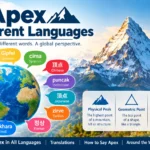
The word “apex” refers to the highest point, top, peak, or most important stage of something. It can describe a physical high point, such as the apex of a mountain, or a figurative high point, such as the apex of a career or achievement.
If you want to know how to say apex in different languages, this guide provides translations in 70 languages, along with easy English pronunciations and practical example sentences. Because the exact word can vary depending on context, the translations below generally use the meaning of “highest point,” “peak,” or “summit.”
Apex in Different Languages
The following table shows apex in all languages, including the native translation, an easy pronunciation guide, and a short example sentence.
| # | Language | Apex Translation | Easy English Pronunciation | Example Sentence | English Meaning |
|---|---|---|---|---|---|
| 1 | Spanish | ápice | AH-pee-seh | El ápice de la montaña estaba cubierto de nieve. | The apex of the mountain was covered with snow. |
| 2 | French | sommet | soh-MAY | Le sommet de la montagne était magnifique. | The apex of the mountain was magnificent. |
| 3 | German | Gipfel | GIP-fel | Der Gipfel des Berges war verschneit. | The apex of the mountain was covered with snow. |
| 4 | Italian | apice | AH-pee-cheh | L’apice della montagna era innevato. | The apex of the mountain was snowy. |
| 5 | Portuguese | ápice | AH-pee-see | O ápice da montanha estava coberto de neve. | The apex of the mountain was covered with snow. |
| 6 | Dutch | top | top | De top van de berg was bedekt met sneeuw. | The apex of the mountain was covered with snow. |
| 7 | Swedish | topp | top | Bergets topp var täckt av snö. | The apex of the mountain was covered with snow. |
| 8 | Norwegian | topp | top | Toppen av fjellet var dekket av snø. | The apex of the mountain was covered with snow. |
| 9 | Danish | top | top | Bjergets top var dækket af sne. | The apex of the mountain was covered with snow. |
| 10 | Finnish | huippu | HOO-pu | Vuoren huippu oli lumen peitossa. | The apex of the mountain was covered with snow. |
| 11 | Icelandic | toppur | TOP-pur | Toppur fjallsins var þakinn snjó. | The apex of the mountain was covered with snow. |
| 12 | Irish | buaic | BOO-ik | Bhí buaic an tsléibhe clúdaithe le sneachta. | The apex of the mountain was covered with snow. |
| 13 | Welsh | copa | KOH-pa | Roedd copa’r mynydd wedi’i orchuddio ag eira. | The apex of the mountain was covered with snow. |
| 14 | Scottish Gaelic | mullach | MOO-lakh | Bha mullach na beinne còmhdaichte le sneachd. | The apex of the mountain was covered with snow. |
| 15 | Latin | apex | AH-peks | Apex montis nive tectus erat. | The apex of the mountain was covered with snow. |
| 16 | Greek | κορυφή | koh-ree-FEE | Η κορυφή του βουνού ήταν καλυμμένη με χιόνι. | The apex of the mountain was covered with snow. |
| 17 | Russian | вершина | ver-SHEE-na | Вершина горы была покрыта снегом. | The apex of the mountain was covered with snow. |
| 18 | Ukrainian | вершина | ver-SHY-na | Вершина гори була вкрита снігом. | The apex of the mountain was covered with snow. |
| 19 | Polish | szczyt | shchit | Szczyt góry był pokryty śniegiem. | The apex of the mountain was covered with snow. |
| 20 | Czech | vrchol | VR-khol | Vrchol hory byl pokrytý sněhem. | The apex of the mountain was covered with snow. |
| 21 | Slovak | vrchol | VR-khol | Vrchol hory bol pokrytý snehom. | The apex of the mountain was covered with snow. |
| 22 | Slovenian | vrh | vrkh | Vrh gore je bil prekrit s snegom. | The apex of the mountain was covered with snow. |
| 23 | Croatian | vrh | vrkh | Vrh planine bio je prekriven snijegom. | The apex of the mountain was covered with snow. |
| 24 | Serbian | врх | vrkh | Врх планине био је прекривен снегом. | The apex of the mountain was covered with snow. |
| 25 | Bulgarian | връх | vruhkh | Върхът на планината беше покрит със сняг. | The apex of the mountain was covered with snow. |
| 26 | Macedonian | врв | vrv | Врвот на планината беше покриен со снег. | The apex of the mountain was covered with snow. |
| 27 | Romanian | vârf | vurf | Vârful muntelui era acoperit de zăpadă. | The apex of the mountain was covered with snow. |
| 28 | Hungarian | csúcs | chooch | A hegycsúcsot hó borította. | The mountain apex was covered with snow. |
| 29 | Albanian | majë | MY-eh | Maja e malit ishte e mbuluar me borë. | The apex of the mountain was covered with snow. |
| 30 | Estonian | tipp | tip | Mäe tipp oli lumega kaetud. | The apex of the mountain was covered with snow. |
| 31 | Latvian | virsotne | VEER-sot-neh | Kalna virsotne bija klāta ar sniegu. | The apex of the mountain was covered with snow. |
| 32 | Lithuanian | viršūnė | veer-SHOO-neh | Kalno viršūnę dengė sniegas. | The apex of the mountain was covered with snow. |
| 33 | Turkish | zirve | zeer-veh | Dağın zirvesi karla kaplıydı. | The apex of the mountain was covered with snow. |
| 34 | Azerbaijani | zirvə | zeer-veh | Dağın zirvəsi qarla örtülmüşdü. | The apex of the mountain was covered with snow. |
| 35 | Armenian | գագաթ | ga-GAHT | Լեռան գագաթը ծածկված էր ձյունով։ | The apex of the mountain was covered with snow. |
| 36 | Georgian | მწვერვალი | mts-ver-va-lee | მთის მწვერვალი თოვლით იყო დაფარული. | The apex of the mountain was covered with snow. |
| 37 | Persian | قله | QOL-leh | قله کوه پوشیده از برف بود. | The apex of the mountain was covered with snow. |
| 38 | Arabic | قمة | QIM-mah | كانت قمة الجبل مغطاة بالثلج. | The apex of the mountain was covered with snow. |
| 39 | Hebrew | פסגה | pis-GAH | פסגת ההר הייתה מכוסה בשלג. | The apex of the mountain was covered with snow. |
| 40 | Hindi | शिखर | SHI-khar | पहाड़ की चोटी बर्फ से ढकी थी। | The apex of the mountain was covered with snow. |
| 41 | Urdu | چوٹی | CHOH-tee | پہاڑ کی چوٹی برف سے ڈھکی ہوئی تھی۔ | The apex of the mountain was covered with snow. |
| 42 | Bengali | চূড়া | CHOO-rah | পাহাড়ের চূড়া বরফে ঢাকা ছিল। | The apex of the mountain was covered with snow. |
| 43 | Punjabi | ਸਿਖਰ | SIKH-ar | ਪਹਾੜ ਦੀ ਚੋਟੀ ਬਰਫ਼ ਨਾਲ ਢੱਕੀ ਹੋਈ ਸੀ। | The apex of the mountain was covered with snow. |
| 44 | Gujarati | શિખર | SHI-khar | પર્વતનું શિખર બરફથી ઢંકાયેલું હતું. | The apex of the mountain was covered with snow. |
| 45 | Marathi | शिखर | SHI-khar | पर्वताचे शिखर बर्फाने झाकले होते. | The apex of the mountain was covered with snow. |
| 46 | Nepali | शिखर | SHI-khar | पहाडको शिखर हिउँले ढाकिएको थियो। | The apex of the mountain was covered with snow. |
| 47 | Sanskrit | शिखरम् | SHI-kha-ram | पर्वतस्य शिखरं हिमेन आवृतम् आसीत्। | The apex of the mountain was covered with snow. |
| 48 | Tamil | உச்சி | OOCH-chee | மலையின் உச்சி பனியால் மூடப்பட்டிருந்தது. | The apex of the mountain was covered with snow. |
| 49 | Telugu | శిఖరం | SHI-kha-ram | పర్వత శిఖరం మంచుతో కప్పబడి ఉంది. | The apex of the mountain was covered with snow. |
| 50 | Kannada | ಶಿಖರ | SHI-kha-ra | ಪರ್ವತದ ಶಿಖರವು ಹಿಮದಿಂದ ಆವೃತವಾಗಿತ್ತು. | The apex of the mountain was covered with snow. |
| 51 | Malayalam | കൊടുമുടി | ko-doo-MOO-dee | മലയുടെ കൊടുമുടി മഞ്ഞിൽ മൂടപ്പെട്ടിരുന്നു. | The apex of the mountain was covered with snow. |
| 52 | Sinhala | මුදුන | moo-DOO-na | කන්දේ මුදුන හිමෙන් වැසී තිබුණි. | The apex of the mountain was covered with snow. |
| 53 | Chinese (Mandarin) | 顶峰 | dǐngfēng | 山的顶峰被白雪覆盖。 | The apex of the mountain was covered with snow. |
| 54 | Japanese | 頂点 | chōten | 山の頂点は雪で覆われていた。 | The apex of the mountain was covered with snow. |
| 55 | Korean | 정상 | jeongsang | 산 정상은 눈으로 덮여 있었다. | The apex of the mountain was covered with snow. |
| 56 | Vietnamese | đỉnh | ding | Đỉnh núi phủ đầy tuyết. | The apex of the mountain was covered with snow. |
| 57 | Thai | ยอด | yôt | ยอดเขาถูกปกคลุมด้วยหิมะ | The apex of the mountain was covered with snow. |
| 58 | Indonesian | puncak | POON-chak | Puncak gunung tertutup salju. | The apex of the mountain was covered with snow. |
| 59 | Malay | puncak | POON-chak | Puncak gunung itu dilitupi salji. | The apex of the mountain was covered with snow. |
| 60 | Filipino | tuktok | took-TOK | Ang tuktok ng bundok ay natatakpan ng niyebe. | The apex of the mountain was covered with snow. |
| 61 | Burmese | ထိပ် | hteik | တောင်ထိပ်သည် နှင်းများဖြင့် ဖုံးလွှမ်းနေသည်။ | The apex of the mountain was covered with snow. |
| 62 | Mongolian | оргил | OR-gil | Уулын оргил цасаар бүрхэгдсэн байв. | The apex of the mountain was covered with snow. |
| 63 | Kazakh | шың | shing | Таудың шыңы қармен жабылған. | The apex of the mountain was covered with snow. |
| 64 | Uzbek | cho‘qqi | chok-kee | Tog‘ cho‘qqisi qor bilan qoplangan edi. | The apex of the mountain was covered with snow. |
| 65 | Kyrgyz | чоку | cho-KOO | Тоонун чокусу кар менен капталган. | The apex of the mountain was covered with snow. |
| 66 | Swahili | kilele | kee-LEH-leh | Kilele cha mlima kilifunikwa na theluji. | The apex of the mountain was covered with snow. |
| 67 | Afrikaans | kruin | KROYN | Die kruin van die berg was met sneeu bedek. | The apex of the mountain was covered with snow. |
| 68 | Zulu | isiqongo | ee-see-KON-go | Isiqongo sentaba sasimbozwe yiqhwa. | The apex of the mountain was covered with snow. |
| 69 | Xhosa | incopho | in-KOP-ho | Incopho yentaba yayigqunywe likhephu. | The apex of the mountain was covered with snow. |
| 70 | Esperanto | pinto | PEEN-toh | La pinto de la monto estis kovrita de neĝo. | The apex of the mountain was covered with snow. |
What Does “Apex” Mean?
Apex is a noun that commonly means the highest point or top of something. It can refer to a physical object, shape, location, or an abstract achievement.
For example:
- The apex of the mountain means its highest point.
- The apex of a triangle can refer to its top vertex.
- The apex of his career means the highest or most successful stage of his career.
- At the apex of power describes someone at the highest level of authority or influence.
The word comes from Latin apex, which was associated with a summit, peak, or highest point.
How to Say Apex in Different Languages
When searching for how to say apex in different languages, it is important to consider context. English uses “apex” for both literal and figurative meanings, but other languages may use separate words for a physical peak, a summit, a top point, or the highest stage of success.
For example, Spanish may use ápice for an abstract or precise highest point, while cima or cumbre can be more natural for the top of a mountain. Likewise, English speakers commonly use “peak” and “apex” interchangeably in some contexts, but they are not always exact synonyms.
Apex as a Physical Highest Point
In geography and everyday speech, “apex” can describe the highest point of a mountain, hill, structure, or shape.
Words such as summit, peak, top, crest, pinnacle, and tip may provide a more natural translation depending on the object being described.
This is why the table uses contextually natural terms rather than forcing the English word “apex” into every language.
Apex as a Figurative Expression
“Apex” is also frequently used in figurative English.
Some common expressions include:
- The apex of success
- The apex of his career
- The apex of achievement
- The apex of power
- Reach the apex
- At the apex of society
In these expressions, the word describes the highest level or most successful point rather than a literal physical peak.
Apex Translations Around the World
The idea behind apex translations is widely understood across languages, although the preferred vocabulary changes by culture and context.
European languages often have words related to “summit,” “peak,” “top,” or “highest point.” Many South Asian languages use terms associated with a mountain summit or elevated point. In East and Southeast Asian languages, different words may distinguish a mountain summit from the highest point of an object or an abstract high point.
Therefore, when using an apex translation, always consider the sentence in which the word appears.
Apex vs. Peak vs. Summit
Although these words are closely related, they are not identical in every context.
Apex usually emphasizes the highest or most important point.
Peak can refer to a physical high point or the maximum level of something, such as “peak performance.”
Summit most commonly describes the highest point of a mountain, although it can also describe a high-level meeting between leaders.
Pinnacle often has a figurative sense and suggests the highest level of achievement or success.
Choosing the right word depends on whether you are describing geography, geometry, achievement, status, or another type of highest point.
Common Uses of the Word Apex
Here are several practical ways to use “apex” in English:
- Apex of a mountain — the highest point of the mountain.
- Apex of a triangle — the vertex opposite the base in a typical triangular shape.
- Apex of a career — the most successful stage of someone’s professional life.
- Apex predator — an animal at or near the top of its food chain.
- Apex of achievement — the highest level of accomplishment.
- Apex of power — the highest position of authority or influence.
These examples show why a single direct translation is not always suitable for every use.
Tips for Using Apex Correctly
Use apex when you want to emphasize a highest point, especially in formal, academic, scientific, literary, or descriptive writing.
For casual conversation, top, peak, or summit may sound more natural depending on the context.
For example:
- Formal: “The athlete reached the apex of her career.”
- Everyday: “She reached the peak of her career.”
- Geography: “They climbed to the summit of the mountain.”
Understanding this difference can help you choose a more natural word when translating apex around the world.
Frequently Asked Questions
1. What is the meaning of apex?
Apex means the highest point, top, peak, or most important stage of something. It can describe a physical point or a figurative level of achievement.
2. How do you say apex in different languages?
The translation depends on the language and context. For example, Spanish uses ápice, French commonly uses sommet, German uses Gipfel, Italian uses apice, and Japanese can use 頂点 (chōten).
3. What is another word for apex?
Common alternatives include peak, summit, pinnacle, top, highest point, and tip. The best synonym depends on the context.
4. Is apex the same as peak?
Apex and peak can have similar meanings, particularly when describing a highest point. However, “apex” can sound more formal and can refer to an important or highest stage of something, while “peak” is more common in everyday English.
5. What does apex mean in a sentence?
In a sentence such as “She reached the apex of her career,” apex means the highest or most successful stage of her career.
Conclusion
Learning apex in different languages reveals how languages express the idea of a highest point in different ways. Depending on the context, the appropriate translation may mean a summit, peak, top, pinnacle, or highest stage.
Whether you are studying languages, translating text, writing creatively, or exploring apex in all languages, understanding the context behind each translation helps you choose the most natural expression.

I am Ricardo Hunter, Administrator at LingoBuz, passionate about languages, translations, and global communication. I help create useful, clear content that makes exploring different languages simple, enjoyable, and accessible.