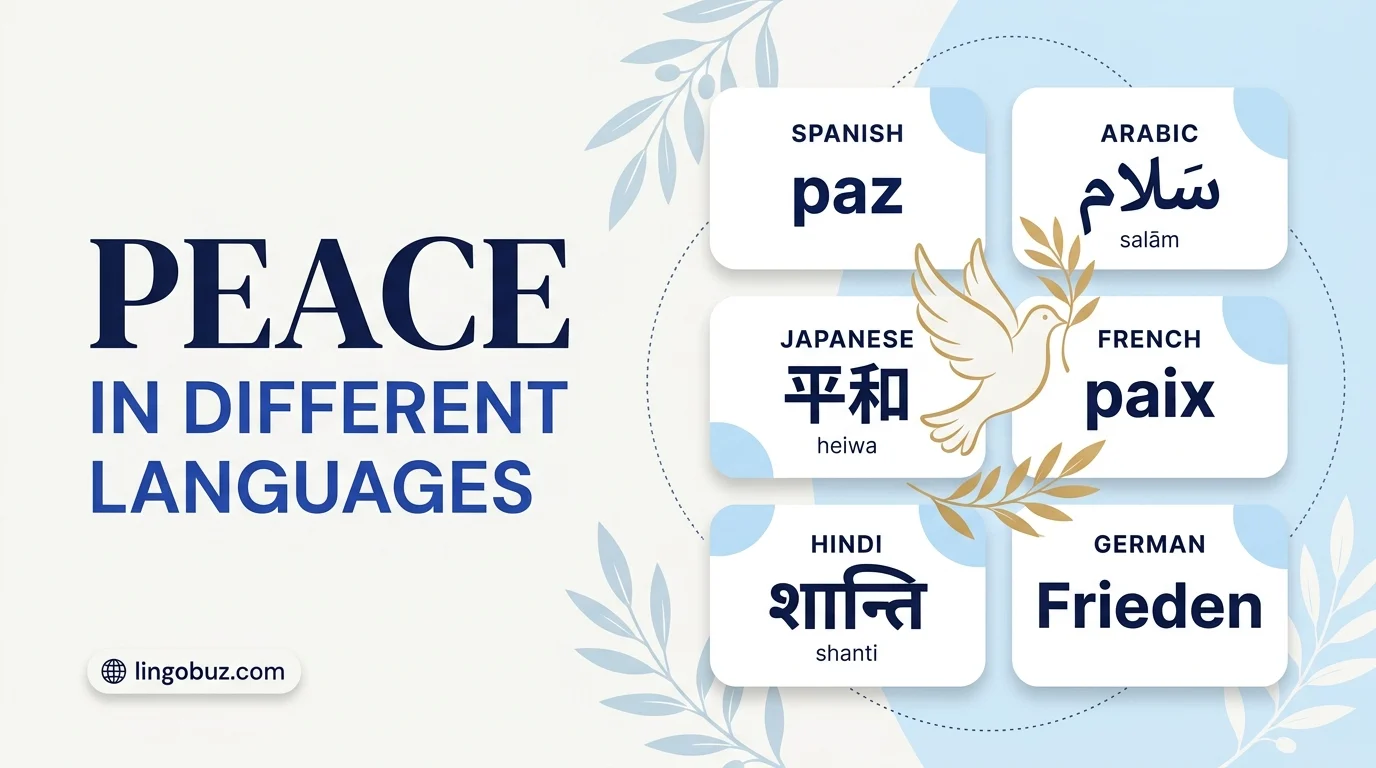
Peace in different languages is expressed through words that represent calmness, harmony, safety, and freedom from conflict. Whether you are looking for a meaningful word for a tattoo, a social media caption, a personal message, or a language-learning project, discovering how different cultures express peace can be inspiring. From paz in Spanish to shanti in Hindi and heiwa in Japanese, each expression offers a useful way to communicate a desire for peace. This guide features 70 languages, easy pronunciation guides, and practical example sentences to help you understand how to say peace around the world.
How Do You Say Peace in Different Languages?
The word for peace varies across languages, but many translations refer to harmony, tranquility, or the absence of conflict.
Here are eight quick examples of peace translations in different languages.
| Language | Native Word | Easy Pronunciation |
|---|---|---|
| Spanish | Paz | pahs |
| French | Paix | peh |
| German | Frieden | FREE-den |
| Italian | Pace | PAH-cheh |
| Hindi | शांति | shaan-tee |
| Japanese | 平和 | hay-wah |
| Chinese (Mandarin) | 和平 | huh-ping |
| Arabic | سلام | sa-laam |
These words can be used in different contexts, from describing a peaceful environment to expressing a wish for peace among people and nations.
1. South Asian Languages
South Asian languages have several words for peace, often used in conversations about harmony, calmness, and well-being.
| Language | Native Phrase | Easy Pronunciation | Example Sentence | English Meaning |
|---|---|---|---|---|
| Hindi | शांति | shaan-tee | हमें शांति चाहिए। | We need peace. |
| Urdu | امن | a-man | ہمیں امن چاہیے۔ | We need peace. |
| Bengali | শান্তি | shaan-tee | আমরা শান্তি চাই। | We want peace. |
| Punjabi | ਸ਼ਾਂਤੀ | shaan-tee | ਸਾਨੂੰ ਸ਼ਾਂਤੀ ਚਾਹੀਦੀ ਹੈ। | We need peace. |
| Gujarati | શાંતિ | shaan-tee | અમને શાંતિ જોઈએ છે. | We need peace. |
| Marathi | शांतता | shaan-ta | आम्हाला शांतता हवी आहे. | We need peace. |
| Nepali | शान्ति | shaan-tee | हामी शान्ति चाहन्छौँ। | We want peace. |
2. East Asian Languages
In East Asia, words for peace can describe social harmony, stability, and a calm state of mind.
| Language | Native Phrase | Easy Pronunciation | Example Sentence | English Meaning |
|---|---|---|---|---|
| Japanese | 平和 | hay-wah | 私たちは平和を望みます。 | We hope for peace. |
| Chinese (Mandarin) | 和平 | huh-ping | 我们希望和平。 | We hope for peace. |
| Korean | 평화 | pyeong-hwa | 우리는 평화를 원해요. | We want peace. |
| Mongolian | Энх тайван | enkh tie-wan | Бид энх тайвныг хүсэж байна. | We want peace. |
| Tibetan | ཞི་བདེ་ | zhee-deh | ང་ཚོས་ཞི་བདེ་འདོད། | We want peace. |
3. Southeast Asian Languages
These languages offer useful expressions for discussing peaceful communities, relationships, and everyday life.
| Language | Native Phrase | Easy Pronunciation | Example Sentence | English Meaning |
|---|---|---|---|---|
| Indonesian | Damai | dah-my | Kami menginginkan damai. | We want peace. |
| Malay | Damai | dah-my | Kami mahukan keamanan. | We want peace and security. |
| Filipino (Tagalog) | Kapayapaan | kah-pah-yah-pah-an | Nais namin ang kapayapaan. | We want peace. |
| Vietnamese | Hòa bình | hwah bing | Chúng tôi mong muốn hòa bình. | We hope for peace. |
| Thai | สันติภาพ | san-tee-paap | เราต้องการสันติภาพ | We want peace. |
| Burmese | ငြိမ်းချမ်းရေး | nyein-chan-yay | ကျွန်ုပ်တို့သည် ငြိမ်းချမ်းရေးကို လိုလားသည်။ | We desire peace. |
| Khmer | សន្តិភាព | san-ti-pheap | យើងចង់បានសន្តិភាព។ | We want peace. |
4. Middle Eastern Languages
In Middle Eastern languages, peace may refer to security, reconciliation, harmony, or a peaceful relationship.
| Language | Native Phrase | Easy Pronunciation | Example Sentence | English Meaning |
|---|---|---|---|---|
| Arabic | سلام | sa-laam | نريد السلام. | We want peace. |
| Hebrew | שלום | sha-lom | אנחנו רוצים שלום. | We want peace. |
| Persian (Farsi) | صلح | solh | ما صلح میخواهیم. | We want peace. |
| Turkish | Barış | bah-rish | Barış istiyoruz. | We want peace. |
| Kurdish (Kurmanji) | Aştî | ash-tee | Em aştiyê dixwazin. | We want peace. |
| Pashto | سوله | so-la | موږ سوله غواړو. | We want peace. |
5. Western European Languages
Many Western European languages use short, recognizable words for peace in personal conversations and public messages.
| Language | Native Phrase | Easy Pronunciation | Example Sentence | English Meaning |
|---|---|---|---|---|
| English | Peace | pees | We all deserve peace. | We all deserve peace. |
| French | Paix | peh | Nous voulons la paix. | We want peace. |
| German | Frieden | FREE-den | Wir wollen Frieden. | We want peace. |
| Dutch | Vrede | VRAY-duh | Wij willen vrede. | We want peace. |
| Irish | Síocháin | SHEE-khawn | Teastaíonn síocháin uainn. | We need peace. |
| Welsh | Heddwch | HETH-ookh | Rydyn ni eisiau heddwch. | We want peace. |
6. Northern European Languages
Northern European languages use distinctive words for peace, whether discussing public harmony or a quiet, restful life.
| Language | Native Phrase | Easy Pronunciation | Example Sentence | English Meaning |
|---|---|---|---|---|
| Swedish | Fred | frehd | Vi vill ha fred. | We want peace. |
| Norwegian | Fred | frehd | Vi ønsker fred. | We want peace. |
| Danish | Fred | freth | Vi ønsker fred. | We want peace. |
| Finnish | Rauha | ROW-ha | Me haluamme rauhaa. | We want peace. |
| Icelandic | Friður | FREE-thur | Við viljum frið. | We want peace. |
| Estonian | Rahu | rah-hoo | Me soovime rahu. | We wish for peace. |
7. Southern European Languages
These translations are useful for travel, conversations, greeting cards, and messages about harmony and understanding.
| Language | Native Phrase | Easy Pronunciation | Example Sentence | English Meaning |
|---|---|---|---|---|
| Italian | Pace | PAH-cheh | Vogliamo la pace. | We want peace. |
| Portuguese | Paz | pahz | Queremos paz. | We want peace. |
| Greek | Ειρήνη | ee-REE-nee | Θέλουμε ειρήνη. | We want peace. |
| Spanish | Paz | pahs | Queremos paz. | We want peace. |
| Catalan | Pau | pow | Volem pau. | We want peace. |
| Basque | Bakea | bah-keh-ah | Bakea nahi dugu. | We want peace. |
8. Slavic and Eastern European Languages
These languages have words for peace that appear in discussions about peaceful communities, cooperation, and freedom from conflict.
| Language | Native Phrase | Easy Pronunciation | Example Sentence | English Meaning |
|---|---|---|---|---|
| Russian | Мир | meer | Мы хотим мира. | We want peace. |
| Ukrainian | Мир | meer | Ми хочемо миру. | We want peace. |
| Polish | Pokój | POH-kooy | Chcemy pokoju. | We want peace. |
| Czech | Mír | meer | Chceme mír. | We want peace. |
| Slovak | Mier | mee-er | Chceme mier. | We want peace. |
| Bulgarian | Мир | meer | Искаме мир. | We want peace. |
| Serbian | Мир | meer | Желимо мир. | We want peace. |
9. African Languages
Across Africa, peace is expressed through many languages and communities. The following examples demonstrate some of this linguistic diversity.
| Language | Native Phrase | Easy Pronunciation | Example Sentence | English Meaning |
|---|---|---|---|---|
| Swahili | Amani | ah-MAH-nee | Tunataka amani. | We want peace. |
| Afrikaans | Vrede | FRAY-duh | Ons wil vrede hê. | We want peace. |
| Zulu | Ukuthula | oo-koo-TOO-lah | Sifuna ukuthula. | We want peace. |
| Xhosa | Uxolo | oo-KHOH-loh | Sifuna uxolo. | We want peace. |
| Yoruba | Àlàáfíà | ah-laa-FEE-ah | A fẹ́ àlàáfíà. | We want peace. |
| Igbo | Udo | oo-doh | Anyị chọrọ udo. | We want peace. |
| Somali | Nabad | nah-bad | Waxaan rabnaa nabad. | We want peace. |
10. Central Asian Languages
Central Asian languages include several related and unrelated linguistic traditions. Their words for peace are useful for understanding regional expressions.
| Language | Native Phrase | Easy Pronunciation | Example Sentence | English Meaning |
|---|---|---|---|---|
| Kazakh | Бейбітшілік | bey-bit-shi-lik | Біз бейбітшілікті қалаймыз. | We want peace. |
| Uzbek | Tinchlik | tinch-lik | Biz tinchlik istaymiz. | We want peace. |
| Kyrgyz | Тынчтык | tynch-tyk | Биз тынчтык каалайбыз. | We want peace. |
| Tajik | Сулҳ | sulh | Мо сулҳ мехоҳем. | We want peace. |
| Turkmen | Parahatçylyk | pah-rah-hat-chuh-luk | Biz parahatçylyk isleýäris. | We want peace. |
11. Other European Languages
These languages provide additional ways to express peace across Europe, including languages spoken in the Balkans and Baltic region.
| Language | Native Phrase | Easy Pronunciation | Example Sentence | English Meaning |
|---|---|---|---|---|
| Romanian | Pace | PAH-cheh | Vrem pace. | We want peace. |
| Hungarian | Béke | BAY-keh | Békét akarunk. | We want peace. |
| Croatian | Mir | meer | Želimo mir. | We want peace. |
| Slovenian | Mir | meer | Želimo mir. | We want peace. |
| Lithuanian | Taika | TIE-kah | Mes norime taikos. | We want peace. |
| Latvian | Miers | mee-ers | Mēs vēlamies mieru. | We want peace. |
12. Additional Languages From Around the World
These further examples show how peace is expressed in different linguistic traditions, including South Asia and the Pacific.
| Language | Native Phrase | Easy Pronunciation | Example Sentence | English Meaning |
|---|---|---|---|---|
| Sanskrit | शान्तिः | shaan-tih | वयं शान्तिम् इच्छामः। | We desire peace. |
| Tamil | அமைதி | ah-mai-thee | எங்களுக்கு அமைதி வேண்டும். | We need peace. |
| Telugu | శాంతి | shaan-tee | మాకు శాంతి కావాలి. | We need peace. |
| Kannada | ಶಾಂತಿ | shaan-tee | ನಮಗೆ ಶಾಂತಿ ಬೇಕು. | We need peace. |
| Malayalam | സമാധാനം | sa-maa-dhaa-nam | ഞങ്ങൾക്ക് സമാധാനം വേണം. | We need peace. |
| Māori | Rangimārie | rah-ngi-MAA-ree-eh | E hiahia ana mātou ki te rangimārie. | We want peace. |
| Hawaiian | Maluhia | mah-loo-HEE-ah | Makemake mākou i ka maluhia. | We want peace. |
How to Use the Word Peace in Everyday Conversations
The word peace can express different ideas depending on the situation. You can use it to discuss international conflict, describe a relaxing environment, or express a personal wish for harmony.
Here are a few examples:
- Wishing someone well: “I hope you find peace and happiness.”
- Discussing conflict: “Both sides need to work toward peace.”
- Describing a calm place: “I enjoy the peace of the countryside.”
- Talking about personal well-being: “Reading helps me feel at peace.”
- Sharing a message: “Let peace guide our actions.”
In translation, remember that a word for peace may refer more specifically to political peace, quietness, safety, or reconciliation.
What Is the Difference Between Peace, Calm, and Harmony?
Although these words are related, they do not always mean the same thing.
| Word | Meaning | Example |
|---|---|---|
| Peace | Freedom from conflict or a state of peaceful well-being | The countries signed a peace agreement. |
| Calm | A state without agitation, noise, or strong emotion | She remained calm during the storm. |
| Harmony | A state of agreement or cooperation | The team worked together in harmony. |
| Tranquility | A condition of quietness and serenity | The garden offered tranquility. |
| Reconciliation | The process of restoring a relationship after disagreement | Their reconciliation brought the family together. |
Choosing the correct word helps you communicate your meaning more precisely, especially when translating from one language to another.
How to Pronounce Peace in Different Languages
Pronunciation becomes easier when you listen to native speakers and practice the word in context. English-style pronunciation guides are useful starting points, but they cannot represent every sound in another language perfectly.
Follow these tips:
- Listen to native pronunciation. Use a reliable dictionary with audio when available.
- Practice slowly. Break longer words into syllables before saying them naturally.
- Pay attention to unfamiliar sounds. Some languages use sounds that do not exist in English.
- Repeat complete sentences. Practicing a phrase in context helps with rhythm and grammar.
- Check regional differences. Pronunciation may vary between countries and communities.
For example, Spanish paz is commonly pronounced approximately like “pahs,” while Japanese 平和 is pronounced “hay-wah.” These approximations help English speakers begin practicing the words.
Why Does Peace Have Different Meanings Across Languages?
The basic idea of peace is widely understood, but individual words can emphasize different aspects of it.
Some expressions focus on the absence of war or conflict. Others are commonly associated with quietness, security, harmony, or reconciliation. Context determines which meaning is most appropriate.
For example, Arabic سلام (salaam) is associated with peace and is also widely used in greetings. Hindi शांति (shanti) can refer to peace or tranquility. The precise meaning depends on the sentence and situation.
These distinctions are important when choosing a word for a tattoo, quotation, greeting card, or meaningful personal message.
How to Learn and Remember Peace Translations
Learning a few words at a time is often more practical than trying to memorize every translation at once.
- Start with familiar languages. Learn words such as Spanish paz, French paix, and Italian pace.
- Group similar words together. Comparing related languages can help you recognize patterns.
- Use flashcards. Write the native word on one side and its pronunciation and meaning on the other.
- Practice short sentences. Remembering “We want peace” can make a word easier to use.
- Review regularly. Brief practice sessions help reinforce vocabulary.
If you are learning a word for a permanent design or public message, verify its spelling, grammar, and intended meaning with a reliable language resource or fluent speaker.
Frequently Asked Questions
1. What is the most common word for peace in different languages?
There is no single word used most commonly across all languages. Examples include paz in Spanish and Portuguese, paix in French, frieden in German, shanti in Hindi, and salaam in Arabic.
2. How do you say peace in 10 different languages?
You can say peace as paz in Spanish, paix in French, pace in Italian, frieden in German, peace in English, shanti in Hindi, heiwa in Japanese, huh-ping in Mandarin Chinese, aman in Urdu, and amani in Swahili.
3. What does peace mean in different cultures?
Peace can refer to the absence of war, personal tranquility, social harmony, security, or reconciliation. The exact emphasis depends on the language, context, and community.
4. How do you say peace in Japanese and Chinese?
In Japanese, peace is 平和, pronounced approximately “hay-wah.” In Mandarin Chinese, it is 和平, pronounced approximately “huh-ping.”
5. Which language has a beautiful word for peace?
Beauty is subjective, but many people appreciate Sanskrit shanti, Spanish paz, Arabic salaam, and Hawaiian maluhia for their sound and associations. The best choice depends on your personal meaning and intended use.
Conclusion
Learning peace in different languages is a meaningful way to explore how people communicate harmony, calmness, and freedom from conflict. From paz and paix to shanti and amani, these 70 language examples offer practical vocabulary, pronunciation guidance, and everyday sentences. Understanding the context behind each translation helps you choose the right expression for conversations, writing, travel, or personal messages.

I’m Jesse Crawford, a language enthusiast and writer passionate about exploring different languages. I create helpful content that makes words, meanings, translations, and language learning simple, useful, and enjoyable for everyone.