Have you ever wondered how to say ceramic in different languages? The word is useful when talking about pottery, tiles, dishes, art, decoration, construction materials, and handcrafted objects. Although many languages have words related to the same concept, pronunciation and spelling can vary significantly.
This guide provides ceramic translations in 70 languages, along with easy English pronunciations and practical example sentences. Whether you are learning languages, traveling, studying design, or simply curious about vocabulary around the world, this list makes it easy to discover how people refer to ceramic.
What Does Ceramic Mean?
Ceramic generally refers to objects or materials made from clay and other inorganic materials that are shaped and hardened, usually through heating at high temperatures.
Ceramics can include plates, cups, bowls, tiles, pottery, sculptures, bathroom fixtures, and many decorative or industrial products. The exact word used in another language can refer to the material, an object made from it, or the broader field of ceramics.
Ceramic in Different Languages
The table below shows how to say ceramic in different languages. The translations are presented in their commonly used forms, with pronunciation guides and short everyday examples.
| # | Language | Native phrase | Easy English pronunciation | Example sentence | English meaning |
|---|---|---|---|---|---|
| 1 | English | ceramic | suh-RAM-ik | This ceramic bowl is beautiful. | This ceramic bowl is beautiful. |
| 2 | Spanish | cerámica | seh-RAH-mee-kah | La cerámica es muy bonita. | The ceramic is very beautiful. |
| 3 | French | céramique | say-rah-MEEK | Cette céramique est magnifique. | This ceramic is magnificent. |
| 4 | German | Keramik | kay-RAH-meek | Die Keramik ist handgemacht. | The ceramic is handmade. |
| 5 | Italian | ceramica | cheh-RAH-mee-kah | La ceramica è elegante. | The ceramic is elegant. |
| 6 | Portuguese | cerâmica | seh-RAH-mee-kah | A cerâmica é artesanal. | The ceramic is handcrafted. |
| 7 | Dutch | keramiek | kay-rah-MEEK | Dit keramiek is bijzonder. | This ceramic is special. |
| 8 | Swedish | keramik | sheh-rah-MEEK | Keramiken är vacker. | The ceramic is beautiful. |
| 9 | Norwegian | keramikk | keh-rah-MEEK | Keramikken er vakker. | The ceramic is beautiful. |
| 10 | Danish | keramik | keh-rah-MEEK | Keramikken er flot. | The ceramic looks nice. |
| 11 | Finnish | keramiikka | KEH-rah-mee-kah | Keramiikka on kaunista. | The ceramic is beautiful. |
| 12 | Icelandic | keramik | KEH-rah-meek | Keramikið er fallegt. | The ceramic is beautiful. |
| 13 | Polish | ceramika | tseh-RAH-mee-kah | Ceramika jest piękna. | The ceramic is beautiful. |
| 14 | Czech | keramika | KEH-rah-mee-kah | Keramika je krásná. | The ceramic is beautiful. |
| 15 | Slovak | keramika | KEH-rah-mee-kah | Keramika je krásna. | The ceramic is beautiful. |
| 16 | Slovenian | keramika | keh-rah-MEE-kah | Keramika je lepa. | The ceramic is beautiful. |
| 17 | Croatian | keramika | keh-rah-MEE-kah | Keramika je lijepa. | The ceramic is beautiful. |
| 18 | Serbian | керамика | keh-rah-MEE-kah | Ова керамика је лепа. | This ceramic is beautiful. |
| 19 | Bulgarian | керамика | keh-rah-MEE-kah | Керамиката е красива. | The ceramic is beautiful. |
| 20 | Macedonian | керамика | keh-rah-MEE-kah | Керамиката е убава. | The ceramic is beautiful. |
| 21 | Russian | керамика | keh-rah-MEE-kah | Эта керамика красивая. | This ceramic is beautiful. |
| 22 | Ukrainian | кераміка | keh-rah-MEE-kah | Ця кераміка красива. | This ceramic is beautiful. |
| 23 | Belarusian | кераміка | keh-rah-MEE-kah | Гэта кераміка прыгожая. | This ceramic is beautiful. |
| 24 | Lithuanian | keramika | keh-rah-MEE-kah | Ši keramika graži. | This ceramic is beautiful. |
| 25 | Latvian | keramika | keh-rah-MEE-kah | Šī keramika ir skaista. | This ceramic is beautiful. |
| 26 | Estonian | keraamika | keh-RAH-mee-kah | See keraamika on ilus. | This ceramic is beautiful. |
| 27 | Hungarian | kerámia | keh-RAHM-ee-ah | Ez a kerámia szép. | This ceramic is beautiful. |
| 28 | Romanian | ceramică | cheh-RAH-mee-kuh | Această ceramică este frumoasă. | This ceramic is beautiful. |
| 29 | Albanian | qeramikë | cheh-rah-MEE-kuh | Kjo qeramikë është e bukur. | This ceramic is beautiful. |
| 30 | Greek | κεραμικό | keh-rah-mee-KOH | Αυτό το κεραμικό είναι όμορφο. | This ceramic is beautiful. |
| 31 | Turkish | seramik | seh-rah-MEEK | Bu seramik çok güzel. | This ceramic is very beautiful. |
| 32 | Azerbaijani | keramika | keh-rah-MEE-kah | Bu keramika gözəldir. | This ceramic is beautiful. |
| 33 | Armenian | կերամիկա | keh-rah-mee-KAH | Այս կերամիկան գեղեցիկ է։ | This ceramic is beautiful. |
| 34 | Georgian | კერამიკა | keh-rah-MEE-kah | ეს კერამიკა ლამაზია. | This ceramic is beautiful. |
| 35 | Arabic | خزف | KHA-zaf | هذا الخزف جميل. | This ceramic is beautiful. |
| 36 | Hebrew | קרמיקה | keh-rah-MEE-kah | הקרמיקה הזאת יפה. | This ceramic is beautiful. |
| 37 | Persian | سرامیک | seh-rah-MEEK | این سرامیک زیباست. | This ceramic is beautiful. |
| 38 | Urdu | سیرامک | see-RAH-mik | یہ سیرامک خوبصورت ہے۔ | This ceramic is beautiful. |
| 39 | Hindi | सिरेमिक | see-RAH-mik | यह सिरेमिक सुंदर है। | This ceramic is beautiful. |
| 40 | Bengali | সিরামিক | shee-RAH-mik | এই সিরামিকটি সুন্দর। | This ceramic is beautiful. |
| 41 | Punjabi | ਸਿਰਾਮਿਕ | see-RAH-mik | ਇਹ ਸਿਰਾਮਿਕ ਸੁੰਦਰ ਹੈ। | This ceramic is beautiful. |
| 42 | Gujarati | સિરામિક | see-RAH-mik | આ સિરામિક સુંદર છે. | This ceramic is beautiful. |
| 43 | Marathi | सिरेमिक | see-RAH-mik | हे सिरेमिक सुंदर आहे. | This ceramic is beautiful. |
| 44 | Nepali | सिरेमिक | see-RAH-mik | यो सिरेमिक सुन्दर छ। | This ceramic is beautiful. |
| 45 | Sinhala | සෙරමික් | seh-rah-MEEK | මේ සෙරමික් ලස්සනයි. | This ceramic is beautiful. |
| 46 | Tamil | பீங்கான் | PEEN-gaan | இந்த பீங்கான் அழகாக உள்ளது. | This ceramic is beautiful. |
| 47 | Telugu | సిరామిక్ | see-RAH-mik | ఈ సిరామిక్ అందంగా ఉంది. | This ceramic is beautiful. |
| 48 | Kannada | ಸೆರಾಮಿಕ್ | seh-rah-MEEK | ಈ ಸೆರಾಮಿಕ್ ಸುಂದರವಾಗಿದೆ. | This ceramic is beautiful. |
| 49 | Malayalam | സെറാമിക് | seh-rah-MEEK | ഈ സെറാമിക് മനോഹരമാണ്. | This ceramic is beautiful. |
| 50 | Odia | ସିରାମିକ୍ | see-RAH-mik | ଏହି ସିରାମିକ୍ ସୁନ୍ଦର ଅଟେ। | This ceramic is beautiful. |
| 51 | Chinese (Mandarin) | 陶瓷 | táo cí | 这个陶瓷很漂亮。 | This ceramic is beautiful. |
| 52 | Japanese | セラミック | seh-rah-MIK-koo | このセラミックは美しいです。 | This ceramic is beautiful. |
| 53 | Korean | 세라믹 | seh-rah-mik | 이 세라믹은 아름답습니다. | This ceramic is beautiful. |
| 54 | Vietnamese | gốm sứ | gohm soo | Gốm sứ này rất đẹp. | This ceramic is very beautiful. |
| 55 | Thai | เซรามิก | seh-rah-MIK | เซรามิกนี้สวยมาก | This ceramic is very beautiful. |
| 56 | Indonesian | keramik | keh-rah-MEEK | Keramik ini sangat indah. | This ceramic is very beautiful. |
| 57 | Malay | seramik | seh-rah-MEEK | Seramik ini sangat cantik. | This ceramic is very beautiful. |
| 58 | Filipino | seramika | seh-rah-MEE-kah | Maganda ang seramika na ito. | This ceramic is beautiful. |
| 59 | Javanese | keramik | keh-rah-MEEK | Keramik iki apik. | This ceramic is beautiful. |
| 60 | Burmese | ကြွေထည် | chweh-htway | ဒီကြွေထည်က လှတယ်။ | This ceramic is beautiful. |
| 61 | Khmer | សេរ៉ាមិច | seh-rah-MIK | សេរ៉ាមិចនេះស្អាត។ | This ceramic is beautiful. |
| 62 | Lao | ເຊລາມິກ | seh-lah-MIK | ເຊລາມິກນີ້ງາມ. | This ceramic is beautiful. |
| 63 | Swahili | kauri | KOW-ree | Kauri hii ni nzuri. | This ceramic is beautiful. |
| 64 | Afrikaans | keramiek | keh-rah-MEEK | Hierdie keramiek is mooi. | This ceramic is beautiful. |
| 65 | Zulu | i-ceramic | ee-seh-RAH-mik | Le ceramic yinhle. | This ceramic is beautiful. |
| 66 | Xhosa | i-ceramic | ee-seh-RAH-mik | Le ceramic intle. | This ceramic is beautiful. |
| 67 | Esperanto | ceramiko | tseh-rah-MEE-koh | Tiu ceramiko estas bela. | That ceramic is beautiful. |
| 68 | Latin | ceramicum | keh-RAH-mee-koom | Ceramicum pulchrum est. | The ceramic is beautiful. |
| 69 | Malagasy | keramika | keh-rah-MEE-kah | Tsara ity keramika ity. | This ceramic is good. |
| 70 | Haitian Creole | seramik | seh-rah-MEEK | Seramik sa a bèl. | This ceramic is beautiful. |
How to Say Ceramic in Different Languages
The word ceramic has traveled widely across languages because ceramics are used in everyday life almost everywhere. In many European languages, the word closely resembles the English term because of the shared Greek-derived origin associated with pottery and ceramics.
In Asian and African languages, there can be more variation. Some languages use a direct loanword for modern industrial ceramic, while others use traditional words associated with pottery, porcelain, clay objects, or fired materials.
When learning how to say ceramic in different languages, it is therefore important to consider the context. A word used for a ceramic tile may not always be identical to the word used for handmade pottery.
Ceramic Translations for Everyday Use
Ceramic products appear in many familiar settings.
You may see ceramic tiles in kitchens and bathrooms, ceramic plates on dining tables, ceramic mugs in offices, and ceramic sculptures in galleries. The vocabulary can also appear in architecture, interior design, manufacturing, art, and education.
For a simple conversation, the translations in the table are useful starting points. For technical writing, however, the exact terminology may change depending on whether you mean ceramic material, pottery, porcelain, tile, or a specific ceramic product.
Ceramic Around the World
Ceramic traditions have developed across many regions and cultures. Pottery has been used for cooking, storage, decoration, trade, and artistic expression for thousands of years.
Different communities developed their own methods for preparing clay, shaping objects, decorating surfaces, and firing finished pieces. This is why ceramic vocabulary can carry cultural meaning as well as a basic dictionary definition.
Today, ceramic is also an important modern material. It is used not only for household goods and art but also for construction, electronics, medical applications, engineering, and industrial manufacturing.
Common Types of Ceramic Products
Ceramics can be found in many forms, including:
- Ceramic plates and bowls
- Ceramic cups and mugs
- Ceramic tiles
- Ceramic vases
- Ceramic sculptures
- Ceramic cookware
- Ceramic sinks
- Decorative ceramic objects
- Industrial ceramic components
- Ceramic electrical insulators
The exact translation may differ when referring to one of these specific products. For example, porcelain, pottery, earthenware, and stoneware can have separate names in many languages.
Why Learn Ceramic in Different Languages?
Learning vocabulary such as ceramic can be especially useful for travelers, students, artists, designers, translators, and people working with international customers.
A person shopping for handmade pottery abroad may need the local word to communicate with a seller. Likewise, an interior designer may encounter ceramic terminology while discussing tiles, surfaces, or decorative materials with international suppliers.
Knowing the basic translation also makes it easier to recognize product descriptions and understand conversations in multilingual environments.
Ceramic vs. Pottery: Are They the Same?
Ceramic and pottery are related, but they are not always interchangeable.
Ceramic is a broad term for materials and objects made by shaping and firing inorganic materials, commonly clay-based materials. Pottery generally refers more specifically to vessels and other objects made from clay and fired.
In everyday conversation, the two words can overlap. In technical or artistic contexts, however, the distinction can matter.
Tips for Learning Ceramic Vocabulary
If you are memorizing ceramic in all languages, start with languages you are most likely to use. Learn the native spelling first, then practice the pronunciation.
It can also help to connect the word with a real object. Look at a ceramic cup, tile, or bowl while saying the translation aloud. Associating vocabulary with physical objects makes the word easier to remember.
For languages that use a different writing system, learn both the native script and a simple pronunciation guide.
Frequently Asked Questions
1. What is ceramic in different languages?
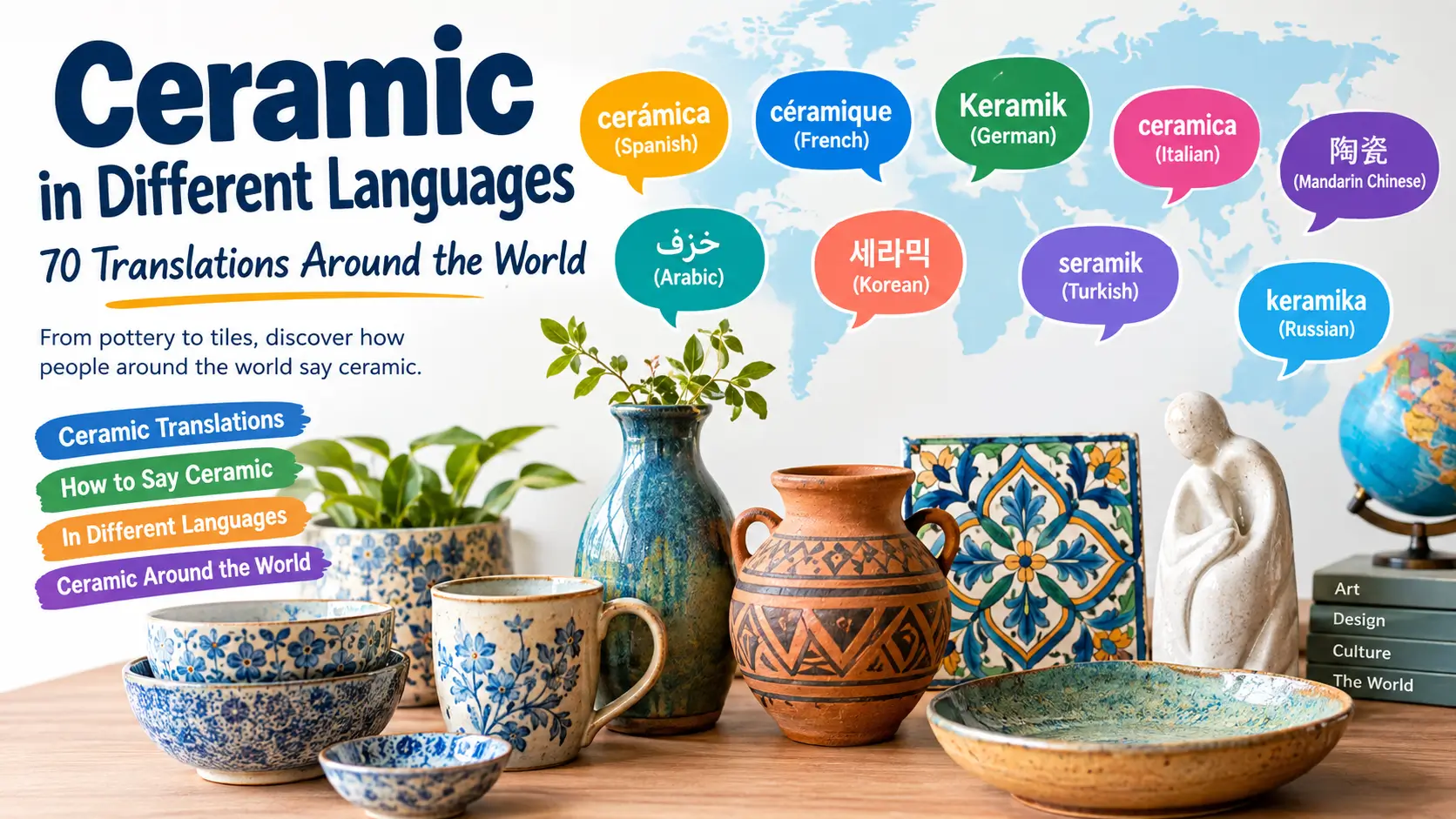
Ceramic has many forms around the world. For example, it is cerámica in Spanish, céramique in French, Keramik in German, ceramica in Italian, 陶瓷 in Mandarin Chinese, and 세라믹 in Korean.
2. How do you say ceramic in Spanish?
In Spanish, ceramic is cerámica. It is commonly used when referring to ceramic materials, pottery, and ceramic objects.
3. What is ceramic called in French?
The French word for ceramic is céramique. It can describe ceramic material, objects, and the broader ceramic arts.
4. Is ceramic the same word in every language?
No. Many languages have words that resemble ceramic because of shared linguistic roots or borrowing, but others use completely different terms. Some languages also distinguish between ceramic, pottery, porcelain, and related materials.
5. Why are ceramic translations useful?
Ceramic translations are useful for language learners, travelers, artists, designers, shoppers, translators, and anyone communicating about pottery or ceramic products internationally.
Conclusion
Learning ceramic in different languages is a simple way to expand your vocabulary while discovering how cultures describe an important material. From European terms such as cerámica and céramique to Asian expressions such as 陶瓷 and 세라믹, the word appears in many interesting forms.
Whether you are searching for ceramic translations, studying languages, discussing pottery, or exploring ceramic traditions around the world, this 70-language guide provides a practical starting point.

I am Scarlett Wilson, a passionate language writer who loves exploring different languages, words, meanings, translations, and useful phrases. I enjoy making language learning simple, clear, and interesting for everyone.